ai
Events

Das Problem des Nichtwissens in der KI (Bilderkennung)
Juri Zach, Hamburg
Öffentliche Vorträge im Allgemeinen Vorlesungswesen Ringvorlesung: Künstliche Intelligenz zwischen Handlungsmacht und gesellschaftlichen Gestaltungsbedarfen
Informatik und Sozial-/Kulturwissenschaft im Gespräch
Darstellungen der KI in den Medien aber auch in der Politik und Wissenschaftsförderung oszillieren zwischen Schrecken, Verheißung und Notwendigkeit, vielfach ohne dass ein hinreichendes informatisches Grundverständnis besteht und informierte Entscheidungen oder Umgangsweisen mit KI-Technologien ermöglicht. Neuere Projekte zwischen Forschung und Wissenschaftskommunikation, wie etwa das "KI-Observatorium", setzen deswegen auf Wissensvermittlung und -austausch.
Das Kolloquium folgt einem ähnlichen Anliegen, das Wissen über KI-Technologien zu erweitern und dabei ein besseres Verständnis davon zu entwickeln, wie sich Handlungsmacht und -möglichkeiten durch die KI neu gestalten. Indem es interdisziplinäre Gespräche zwischen Kulturwissenschaftler*innen und Informatiker*innen initiiert, werden in kurzen Vorträgen historische und theoretische Grundlagen, sowie ausgewählte Anwendungsbereiche der Künstlichen Intelligenz vorgestellt und diskutiert. Anhand von Praxisbeispielen von KI in Anwendung und Entwicklung werden KI Technologie verständlich und für die Analyse greifbar. Das hauptsächliche Ziel des Kolloquiums besteht in beiden Disziplinen darin, die jeweils andersartige Herangehensweise kennen und verstehen zu lernen.
Institutions
- HAW Hamburg
- Universität Hamburg
DASHH Winter Colloquium | Interdisciplinary AI Research for Particle Physics & Structural Biology
As the year is approaching its end, we cordially invite you to this year's last Data Science Colloquium on December 19th, 2024, at 5 pm at the Albert-Einstein-Ring 8-10 on Campus Bahrenfeld (https://g.co/kgs/5eMwmnz, Ground Floor, Rooms 5 & 10). We look forward to talks by DASHH researchers Prof. Christian Schwanenberger and Dr. Andrea Thorn on current opportunities and challenges for artificial intelligence in particle physics & structural biology.
We hope to meet you for discussions after the talks with some snacks & hot beverages in a cheerful atmosphere.
Data Science and AI Inaugural Lectures 2023
We invite you to join us in celebrating and promoting the new W1 Professorship appointments in the areas of data science and AI at UKE. The Data Science and AI Inaugural Lectures 2023 will take place on Thursday 13th July, 15:00-18:00 at Erika-Haus, UKE. This will be a great opportunity to get to know the professors and their research topics in the areas of data science and AI relevant to biomedicine and with broad application in the clinic.
bAIome, the Center for Biomedical AI at UKE, which brings together UKE faculty members with international background and expertise in diverse areas relevant to AI including high performance computation, data science, mathematics, and biomedical research, will be hosting this event and following the inaugural lectures will showcase current research projects and ventures with a poster session during the reception to provide a great environment for networking and cooperation.
Data Science Colloquium | “Artificial Intelligence in Computer-Assisted Drug Design”
We are happy to announce the next talk of our Data Science Colloquium which is an event jointly organized by Data Science in Hamburg - the Helmholtz Graduate School for the Structure of Matter (DASHH) and our partners.
We are looking forward to the talk of Dr. Christoph Grebner (Computational Chemist, Sanofi-Aventis Deutschland GmbH, Frankfurt, Germany)
Drug design is a resource-demanding process that necessitates mining the incredibly large hemical space and includes expensive and time-consuming experiments. In the last decades, computer-assisted drug design (CADD) has become an indispensable tool to support and facilitate this process. Recent developments in the field include incorporating machine learning models at various steps of the drug discovery process and improving algorithms for searching the chemical universe. The talk will highlight key steps in computer-assisted drug design and discuss upcoming opportunities and challenges for AI technologies in CADD. Dr. Christoph Grebner is a computational chemist at Sanofi with several years of experience supporting drug design projects with CADD.
The official announcement and abstract of the talk can be found here
You can join the on-site colloquium or the Zoom meeting
Further information concerning the speakers and the lectures can also be found here
We are looking forward to your participation!
Data Science Colloquium | Recent Progress on Inertial Fusion Ignition at the National Ignition Facility and the Path Ahead
The National Ignition Facility (NIF) at Lawrence Livermore National Laboratory is a 2.2 MJ laser facility designed to achieve inertial confinement fusion ignition. In this approach, the 192 laser beams of NIF are used to compress and heat a millimeter-scale capsule of deuterium-tritium fuel to fusion ignition conditions where the fusion energy produced exceeds the laser energy delivered to the target. On Dec. 5, 2022, a NIF experiment crossed this ignition threshold for the first time. In the two years since, significant further progress has been made with recent experiments producing more than double the amount of laser energy used to drive the implosion.
This talk reviews the importance of the interplay of theory and high-performance computing with experiments, and critical hurdles that had to be overcome to reach ignition, recent progress in NIF experiments since ignition was achieved, and some of the current and future plans aiming for even higher fusion yields.
This work was performed under the auspices of the U.S. Department of Energy by Lawrence Livermore National Laboratory under Contract DE-AC52-07NA27344.
You can join the on-site colloquium or the Zoom meeting after registering here
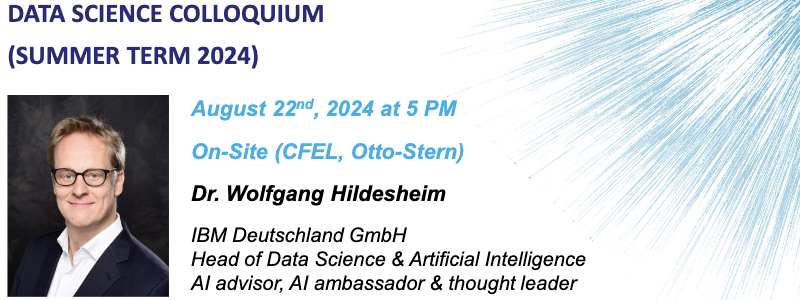
Data Science Colloquium on August 22nd, 2024 | “AI in Industry | Opportunities and Use Cases”
The Data Science Colloquium is an event jointly organized by DASHH, the Center for Data and Computing in Natural Sciences (CDCS), the clusters of excellence CUI - Advanced Imaging of Matter and Quantum Universe of the Universität Hamburg (UHH), the Department of Informatics of the UHH, the Institute of Mathematics of the Hamburg University of Technology, ahoi.digital - the Alliance of Hamburg Universities for Computer Science and the Wolfgang Pauli Centre.
We are looking forward to the talk of Dr. Wolfgang Hildesheim (IBM Deutschland GmbH, Head of Data Science & Artificial Intelligence, AI advisor, AI ambassador & thought leader) on Thursday, August 22nd, 2024 at 5 pm (on-site). His talk is entitled "AI in Industry | Opportunities and Use Cases". The official announcement and abstract of the talk can be found here.
These events are an ideal opportunity to meet renowned scientists and discuss recent Data Science challenges.
Please subscribe here for news and Zoom links regarding our colloquia or contact dashh-office@desy.de for the individual Zoom link of an online event!
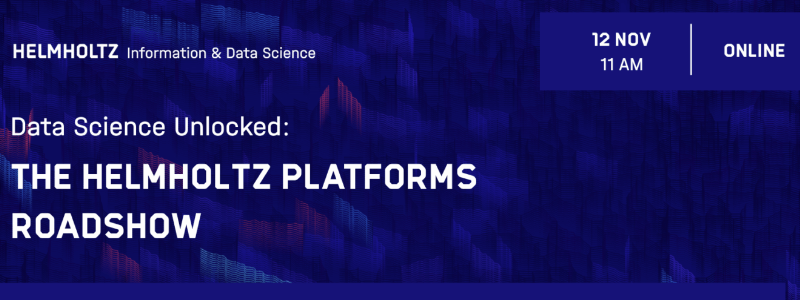
Data Science Unlocked: Helmholtz Platforms Roadshow
Working with data, code, images, or metadata? Then don’t miss the virtual roadshow hosted by the five Helmholtz Information and Data Science platforms – designed to connect you with the right resources that can elevate your research.
Whether you’re just starting your career or leading your own lab, each platform offers specialized support to meet your needs for free.
What’s in store:
- Fast-track introductions – Hear a short, dynamic overview of each platform’s focus and strengths.
- Interactive breakouts – Talk directly with platform representatives and explore tools, resources, and expertise that can boost your research.
Data-Science-Slam #4: Studentische Datenprojekte rund um KI und weitere spannende Themen!
Bei dieser Veranstaltung stellen Studierende, die sich auf die Förderung als studentische Forschungsgruppen beworben haben, ihre datengetriebenen Projekte in kurzen Pitches vor. Der Themenschwerpunkt dieser vierten und letzten Runde ist (generative) künstliche Intelligenz. Im Anschluss an die Pitches werden von einer Jury vor Ort die finalen Förderentscheidungen mitgeteilt, bei denen die Gruppen bis zu 10.000 EUR pro Projekt erhalten können. Nach dem Hauptprogramm um 19:00 Uhr laden wir alle Teilnehmenden zu einem gemütlichen Get-Together mit Snacks und Getränken ein.
Seien Sie dabei, um inspirierende Ideen zu entdecken und neue Kontakte zu knüpfen. Wir freuen uns auf Ihre Teilnahme! Melden Sie sich gerne direkt auf dieser Seite an.
Institutions- DDLitLab, ISA-Zentrum
DDLitLab im Dialog: Aufbau fachbezogener KI-Communities und Durchführung einer Lehrveranstaltung zu KI und ML
Zu Gast: Dr. rer. nat. Lilian Löwenau, Projektkoordinatorin / Operative Projektleitung „AI-SKILLS“, Humboldt-Universität zu Berlin
Das vom BMBF geförderte Lehre- und Infrastrukturprojekt AI-SKILLS der Berliner Humboldt-Universität hat das Ziel, Lehrenden und Studierenden die fachspezifische Auseinandersetzung mit KI-Methoden und KI-Technologien forschungsbezogen und anwendungsorientiert zu vermitteln. Dabei verfolgt das Projekt einen multidisziplinären Ansatz, d.h., alle Disziplinen sind in den Communities of Practice vertreten, die sich jeweils untereinander den Themen KI und ML widmen. Im Rahmen des DDLitLab wird am Beispiel AI-SKILLS der konkrete Aufbau solcher Communities vorgestellt; dabei werden Erfahrungen mit der Initialisierungs- und Produktivphase der Communities geteilt und sowohl praktische Aspekte als auch erforderliche Maßnahmen zur Nachhaltigkeit und Nachnutzbarkeit der Arbeit in den Communities besprochen. Über den Aspekt der Communities hinausgehend, wird als Abschluss die gesamtheitliche Förderung der Themen KI und ML im universitären Curriculum anlässlich der Durchführung einer entsprechenden fächerübergreifenden Ringvorlesung besprochen.
Institutions
- DDLitLab, ISA-Zentrum
DDLitLab Lecture Series: Where do you come from, ChatGPT? - Einführung in die Funktionsweise von Sprachmodellen
Um in einen lebhaften Austausch mit Interessierten zu treten und die Diskussion rund um das Thema Daten- und Digitalkompetenzen an der Universität Hamburg anzuregen, hat das Projekt DDLitLab die Lecture Series ins Leben gerufen. In den Vorträgen mit anschließender Diskussion beleuchten die Referent:innen Ihre Perspektiven auf die Vermittlung von grundlegenden Datenkompetenzen in Schule und Hochschule. Die Veranstaltung richtet sich sowohl an Mitglieder der UHH als auch externe Gäste.
Zum Vortrag
Referent: Prof. Dr. Chris Biemann, Wissenschaftlicher Direktor HCDS und Professor für Sprachtechnologie am Fachbereich Informatik, UHH
In diesem Vortrag tasten wir uns an die Funktionsweise von Sprachmodellen heran. Wie ging die Entwicklung von einfacher Statistik bis hin zu (künstlich) intelligenten Dialogsystemen? Welche Mechanismen, welche technischen Voraussetzungen und welcher menschlicher Input ist nötig zum Erreichen der momentan verfügbaren Sprachkompetenz auf hohem Niveau? Was machen diese Modelle noch falsch, und was sind die vorhersehbaren Entwicklungen der nächste Jahre?
Melden Sie sich hier an: https://www.isa.uni-hamburg.de/ddlitlab/veranstaltungen/lecture-series-sose-2023.html
Kontakt: Carolin Scharfenberg / Tel: +49 40 42838-8889
Decision AI for biodiversity: From promise to impact
Over the past two decades, I have developed AI tools to support decision-making in biodiversity conservation. Methods such as Markov Decision Processes (MDPs), Partially Observable MDPs (POMDPs), and adaptive management help us plan under uncertainty, incorporate feedback, and learn from dynamic ecological systems. These techniques have supported efforts from invasive species management to threatened species recovery, helping balance short-term actions with long-term outcomes.
Yet some of the most important insights lie beyond the algorithms themselves. Reversing the biodiversity extinction crisis requires more than technical capability: it demands co-design with ecologists, social scientists, landholders, and policymakers. It calls for a shift from what can we build? to what does biodiversity actually need?
This is the mission of the Environmental Informatics Hub at Monash, a new initiative I lead within the Faculty of IT: to develop AI that supports the future of biodiversity, not just the future of technology. But isolated efforts won’t be enough. If we are serious about halting biodiversity loss, we need a globally coordinated approach, a clear framework, much like the Global Biodiversity Framework (GBF), that defines the AI capabilities required to meet conservation targets.
Learning Objectives:
- Learn about how AI can help support decision-making for the conservation of biodiversity
- Learn about the needs and challenges in developing interpretable, non-autonomous and poor data AI systems
Institutions
- AI for Good
Design it! 30 Minuten zu: Visuelle Verständlichkeit in Lehre, Forschung und Verwaltung
Oft fällt Gestaltung erst auf, wenn sie Probleme verursacht, etwa wenn Informationen nicht verständlich sind, Materialien überladen wirken oder alltägliche Abläufe ins Stocken geraten. In dieser Schulung zeigen wir, wie grundlegende Designprinzipien dazu beitragen, Kommunikation, Lehrmaterialien und Prozesse klarer, zugänglicher und wirksamer zu gestalten. Wir sprechen außerdem über Sehgewohnheiten, klassische Fallstricke und nützliche Tools.
Für die Teilnahme an dieser Online-Schulung werden keine Vorkenntnisse vorausgesetzt.
Als virtuellen Lernort werden wir ZOOM nutzen. Der ZOOM-Link wird einen Tag vor Schulungsbeginn bis 13:00 Uhr versendet.
Institutions
- Multimedia Kontor Hamburg gGmbH
Die didaktische Sicht auf Künstliche Intelligenz (KI) in der Hochschulbildung
Das Professor:innen-Forum des Hamburger Zentrums für Universitäres Lehren und Lernen (HUL) ergänzt als interaktives Angebot den Podcast zur Wissenschaftsdidaktik, der Professor:innen mit der Hochschuldidaktik ins Gespräch bringt (ProfCast). Am HUL ist es das einzige Angebot, das sich gezielt an die Gruppe der Professor:innen an der Universität Hamburg richtet und einmal im Semester zum gegenseitigen Austausch einlädt.
Themenschwerpunkt am 8.1.2026: Künstliche Intelligenz stellt die Hochschulbildung vor große Herausforderungen, die kontrovers diskutiert werden – abhängig von der jeweils eingenommenen Perspektive. In ihrem Impulsvortrag nimmt Gabi Reinmann eine didaktische Perspektive ein. Konkret macht sie ein „Sprachangebot“ und stellt einige Kategorien vor, von denen sie denkt, dass sie uns helfen, die aktuellen Fragen und Herausforderungen didaktisch zu betrachten. Dazu ist zunächst zu klären, was es heißt, einen didaktischen Blick einzunehmen. Sie wird hierzu unter anderem auf traditionelle Konzepte wie das didaktische Dreieck zurückgreifen, denn damit lässt sich gut analysieren, was KI derzeit und künftig mit dem Verhältnis zwischen Lehrenden, Studierenden und der Wissenschaft als Gegenstand von Hochschulbildung macht bzw. machen kann. Der Vortrag liefert keine „Instant Lösungen“, aber ein Denkwerkzeug, das dabei helfen kann, didaktische Entscheidungen in Zeiten von KI zu treffen.
Dies aufgreifend bietet das Forum in der zweiten Hälfte Raum für eine gemeinsame Diskussion mit der Möglichkeit, eigene Erfahrungen mit KI in der Hochschulbildung auszutauschen.
Anmeldung: Das Forum ist Teil des Professor:innen-Angebots am HUL. Um eine kurze Anmeldung per E-Mail an gabi.reinmann@uni-hamburg.de wird gebeten. Mit der Rückantwort wird der ZOOM-Link versendet.
Institutions
- HUL
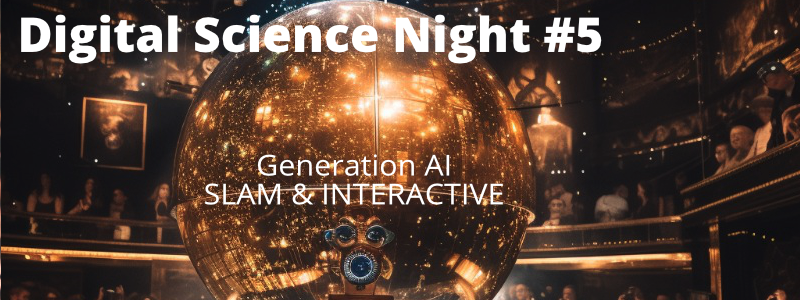
Digital Science Night #5: Generation AI: Ich bin doch nur ein Language Model!
Ein besonders digitaler Abend zur Digitalisierung mit einem Science Slam von Hamburger Informatik-Expert*innen und DJ’s für die Nacht
7. Dezember ab 19 Uhr im Fundbureau.
Künstliche Intelligenz beherrscht die Schlagzeilen und eine ganze Generation wächst auf mit generativer KI. Umwälzen soll sie, was wir für normal halten, rationalisiert Jobs und Arbeit weg, macht Menschen überflüssig. Aber es ist Weihnachten – und man kann die Geschichte auch anders erzählen. Generative KI kann Bilder generieren, die uns ansprechen, Texte schreiben, die sensibler und vielfältiger sind als die von andere Autor:innen und vielleicht kann sie auch bessere Weihnachtsgeschenke auswählen. Wir können anders spenden und vielleicht verstehen wir in einem besseren Leben auch die Mathematik hinter der ganzen Magie.
Liste der Slamer*innen und deren Themen:
- Sabine Wieluch, bleeptrack
- Mijail Guillemard, Homologie-Funktoren, Signale und Formalisierungen
- Peer Stelldinger, HAW, Apfelmännchen und Grenzkontrollen
- Anton Wiehe, Adalab, Musik visualisieren mit künstlicher Intelligenz
- Ayse Glass, HCU, Creative AI and data generation for cities
- Omar Urdu, UHH
- Teresa and the TUHH GANg, TUHH, GAN, GAN Gone Wild! Scandalous Showdown Between AI Models Exposed
- und weitere Überraschungsgäste!
Institutions
-
Creative Space for Technical Innovations, HAW Hamburg


Digital Total
The two-day event "Digital Total" is organized and conducted by the House of Computing & Data Science (HCDS) of the Universität Hamburg, in collaboration with partners from the scientific platform PIER PLUS and the Academy of Sciences and Humanities in Hamburg.
Day 1 - Computing & Data Science in the Metropolitan Region
The goal of the first day, which is co-organized by CDCS, is to showcase and consolidate the topics of Data Science / AI / Computation, which are strongly represented in the Hamburg Metropolitan Region. A key focus will be the discussion on a common PIER PLUS initiative called "PIER Computing and Data Science." Additionally, the Academy of Sciences and Humanities in Hamburg will host an interdisciplinary forum for exchanging ideas about the future of digital transformation in the metropolitan region and potential synergies among cross-institutional initiatives. The first day will be concluded with a social event in the evening.
Day 2 - Computing & Data Science at the Universität Hamburg
The second day will focus on Data Science / AI / Computation at the Universität Hamburg. It will also serve as the kickoff for introducing the Cross-Disciplinary Labs (CDLs) located within HCDS.
Alongside the presentations in Audimax 1 & 2, the foyer will feature posters showcasing various projects throughout the event, presented during two poster sessions on Day 1 and 2.
A detailed program and registration for Digital Total can be found here
Digitale Lunch Lecture: Using Universal Design for Learning and AI for Student Engagement
The lecture will be held in English. However, questions in German are possible. Subtitles will also be provided.
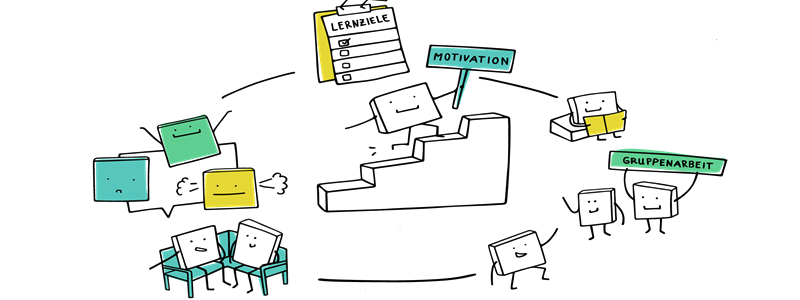
In our large-enrollment class meetings, students can feel disconnected from the learning experience and may stop coming to lectures all together. What can bring them back? Designing our interactions with students to be as broadly accessible and inclusive as possible, in order to foster greater student agency, autonomy, and satisfaction. This webinar will share concrete strategies for how to adopt Universal Design for Learning (UDL) principles to engage learners deeply. We’ll also explore how to use artificial intelligence tools to increase the positive impact of UDL.
Das Team des Projekts “Mehr UDL in der Lehre” freut sich sehr, Tom Tobin an der Uni Hamburg mit einem Beitrag begrüßen zu dürfen. Tom Tobin (PhD, MSLS, PMP, MOT, CPACC ) ist ein international anerkannter Wissenschaftler, Autor und Referent im Bereich technologiegestützter Bildung. Eduflow zählt ihn zu den weltweit einflussreichsten Stimmen im Bereich Lernen und Lehre (Top 100 Learning Influencers). Zu seinen Publikationen zählen u.a. Reach Everyone, Teach Everyone (2018), Implementing UDL in Irish Further Education and Training (2021), Evaluating Teaching in the Digital Era (erscheint 2027).
Institution
- UHH
Digitale Prüfungen, KI im Prüfungskontext & gute wissenschaftliche Praxis
Mit dem schlagartigen Aufkommen von KI-Generatoren für unterschiedlichste Medienformen seit Ende 2022 stehen Hochschulen hinsichtlich ihrer Lehre und ihrer digitalen Prüfungsumsetzung enormen Möglichkeiten aber auch Herausforderungen gegenüber. Neben Fragen des Urheberrechts und des Datenschutzes ist insbesondere der Bereich des Prüfungsrechts von diesen Entwicklungen betroffen und es bedarf geeigneter Maßnahmen für einen konstruktiven Umgang mit dieser technologischen Revolution.
Dabei stellt sich vor allem auch die Frage: Können per KI-Generator erstellte Texte und Medieninhalte überhaupt als künstlich generierte Inhalte erkannt und detektiert werden? Und wenn ja, wie verlässlich sind die Ergebnisse von KI-Detektoren und wie lassen sich diese im Prüfungsrecht berücksichtigen? Auch ergibt sich bei solch rasanten Technologieentwicklungen immer die Notwendigkeit einer staatlichen Regulierung, wie sie im Zuge des EU AI-Act beabsichtigt wird. Welche Implikationen bringt diese Regulierung allgemein und speziell für den Hochschulbereich mit sich?
Schwerpunkte sind:
- KI-VO-E bzw. AI-Act (Entwurf)
- Hochschulgesetze (der Länder, insbesondere Hamburg)
- Studien- und Prüfungsordnungen
Als virtuellen Lernort werden wir ZOOM nutzen. Der ZOOM-Link wird einen Tag vor Schulungsbeginn bis 13:00 Uhr versendet.
Institutions
- Multimedia Kontor Hamburg gGmbH
Digitale Prüfungen, KI im Prüfungskontext & gute wissenschaftliche Praxis
Mit dem schlagartigen Aufkommen von KI-Generatoren für unterschiedlichste Medienformen seit Ende 2022 stehen Hochschulen hinsichtlich ihrer Lehre und ihrer digitalen Prüfungsumsetzung enormen Möglichkeiten aber auch Herausforderungen gegenüber. Neben Fragen des Urheberrechts und des Datenschutzes ist insbesondere der Bereich des Prüfungsrechts von diesen Entwicklungen betroffen und es bedarf geeigneter Maßnahmen für einen konstruktiven Umgang mit dieser technologischen Revolution.
Dabei stellt sich vor allem auch die Frage: Können per KI-Generator erstellte Texte und Medieninhalte überhaupt als künstlich generierte Inhalte erkannt und detektiert werden? Und wenn ja, wie verlässlich sind die Ergebnisse von KI-Detektoren und wie lassen sich diese im Prüfungsrecht berücksichtigen? Auch ergibt sich bei solch rasanten Technologieentwicklungen immer die Notwendigkeit einer staatlichen Regulierung, wie sie im Zuge des EU AI-Act beabsichtigt wird. Welche Implikationen bringt diese Regulierung allgemein und speziell für den Hochschulbereich mit sich?
Diesen und weiteren Fragen wollen wir uns im Rahmen dieses Workshops annähern und anschließend gemeinsam mit allen Teilnehmenden vertiefend darüber diskutieren.
Schwerpunkte sind:
- KI-VO-E bzw. AI-Act (Entwurf)
- Hochschulgesetze (der Länder, insbesondere Hamburg)
- Studien- und Prüfungsordnungen
Anmeldung hier
Als virtuellen Lernort werden wir ZOOM nutzen. Der ZOOM-Link wird einen Tag vor Schulungsbeginn bis 13:00 Uhr versendet.
Institution
- Multimedia Kontor Hamburg gGmbH
Digitale Prüfungen, KI im Prüfungskontext & gute wissenschaftliche Praxis
Mit dem schlagartigen Aufkommen von KI-Generatoren für unterschiedlichste Medienformen seit Ende 2022 stehen Hochschulen hinsichtlich ihrer Lehre und ihrer digitalen Prüfungsumsetzung enormen Möglichkeiten aber auch Herausforderungen gegenüber. Neben Fragen des Urheberrechts und des Datenschutzes ist insbesondere der Bereich des Prüfungsrechts von diesen Entwicklungen betroffen und es bedarf geeigneter Maßnahmen für einen konstruktiven Umgang mit dieser technologischen Revolution.
Dabei stellt sich vor allem auch die Frage: Können per KI-Generator erstellte Texte und Medieninhalte überhaupt als künstlich generierte Inhalte erkannt und detektiert werden? Und wenn ja, wie verlässlich sind die Ergebnisse von KI-Detektoren und wie lassen sich diese im Prüfungsrecht berücksichtigen? Auch ergibt sich bei solch rasanten Technologieentwicklungen immer die Notwendigkeit einer staatlichen Regulierung, wie sie im Zuge des EU AI-Act beabsichtigt wird. Welche Implikationen bringt diese Regulierung allgemein und speziell für den Hochschulbereich mit sich?
Diesen und weiteren Fragen wollen wir uns im Rahmen dieses Workshops annähern und anschließend gemeinsam mit allen Teilnehmenden vertiefend darüber diskutieren.
Schwerpunkte sind:
- KI-VO-E bzw. AI-Act (Entwurf)
- Hochschulgesetze (der Länder, insbesondere Hamburg)
- Studien- und Prüfungsordnungen
Anmeldung hier
Als virtuellen Lernort werden wir ZOOM nutzen. Der ZOOM-Link wird einen Tag vor Schulungsbeginn bis 13:00 Uhr versendet.
Institutions
- Multimedia Kontor Hamburg gGmbH
Digitale Prüfungen, KI im Prüfungskontext & gute wissenschaftliche Praxis
Mit dem schlagartigen Aufkommen von KI-Generatoren für unterschiedlichste Medienformen seit Ende 2022 stehen Hochschulen hinsichtlich ihrer Lehre und ihrer digitalen Prüfungsumsetzung enormen Möglichkeiten aber auch Herausforderungen gegenüber. Neben Fragen des Urheberrechts und des Datenschutzes ist insbesondere der Bereich des Prüfungsrechts von diesen Entwicklungen betroffen und es bedarf geeigneter Maßnahmen für einen konstruktiven Umgang mit dieser technologischen Revolution.
Dabei stellt sich vor allem auch die Frage: Können per KI-Generator erstellte Texte und Medieninhalte überhaupt als künstlich generierte Inhalte erkannt und detektiert werden? Und wenn ja, wie verlässlich sind die Ergebnisse von KI-Detektoren und wie lassen sich diese im Prüfungsrecht berücksichtigen? Auch ergibt sich bei solch rasanten Technologieentwicklungen immer die Notwendigkeit einer staatlichen Regulierung, wie sie im Zuge des EU AI-Act beabsichtigt wird. Welche Implikationen bringt diese Regulierung allgemein und speziell für den Hochschulbereich mit sich?
Diesen und weiteren Fragen wollen wir uns im Rahmen dieses Workshops annähern und anschließend gemeinsam mit allen Teilnehmenden vertiefend darüber diskutieren.
Schwerpunkte sind:
- KI-VO-E bzw. AI-Act (Entwurf)
- Hochschulgesetze (der Länder, insbesondere Hamburg)
- Studien- und Prüfungsordnungen
Institutions
- Multimedia Kontor Hamburg gGmbH

Universität Hamburg
Adeline Scharfenberg