big data
Events

Low-res lang tools - workshop on NLP tools for language communities
This workshop may appeal to you if you are a language activist, work in collaboration with language activists or with low-resource languages.
As part of our research, we currently aim to provide NLP tools and models tailored to language organisations and communities.
In this regard, we are pleased to invite you or language activists from your network to our first 2-hour online workshop on tools for low-resource languages. We are currently focusing on languages for which some digital texts are available.
This work is part of an ERC Proof of Concept Grant, which focuses on creating tools for language activists. Additionally, our research group has recently received an ERC Advanced Grant to develop Large Language Models for languages with less digital resources. Both grants enable more long-term collaboration with language communities.
This first session will be in two parts:
- we will present our tool for parallel sentence mining (i.e., finding translation pairs among two monolingual corpora) for low-resource languages. This task constitutes an essential step towards developing a dedicated machine translation system or enabling a large language model to support your language. Details on the tool can be found at https://lnkd.in/ejHBwTDT
- we will show the diversity of possible NLP tools that could be extended to other languages. These will range from spell checkers to speech recognition, but with a strong focus on machine translation and chatbots.
If you are interested in attending the workshop or would like to stay in touch for future updates, please fill out this form: https://lnkd.in/eeiThqgg.
Join Zoom Meeting
Meeting ID: 651 5946 8381
Passcode: 178965
Institutions
- TUM Heilbronn
Low-res lang tools - workshop on NLP tools for language communities
This workshop may appeal to you if you are a language activist, work in collaboration with language activists or with low-resource languages.
As part of our research, we currently aim to provide NLP tools and models tailored to language organisations and communities.
In this regard, we are pleased to invite you or language activists from your network to our first 2-hour online workshop on tools for low-resource languages. We are currently focusing on languages for which some digital texts are available.
This work is part of an ERC Proof of Concept Grant, which focuses on creating tools for language activists. Additionally, our research group has recently received an ERC Advanced Grant to develop Large Language Models for languages with less digital resources. Both grants enable more long-term collaboration with language communities.
This first session will be in two parts:
- we will present our tool for parallel sentence mining (i.e., finding translation pairs among two monolingual corpora) for low-resource languages. This task constitutes an essential step towards developing a dedicated machine translation system or enabling a large language model to support your language. Details on the tool can be found at https://lnkd.in/ejHBwTDT
- we will show the diversity of possible NLP tools that could be extended to other languages. These will range from spell checkers to speech recognition, but with a strong focus on machine translation and chatbots.
If you are interested in attending the workshop or would like to stay in touch for future updates, please fill out this form
Join Zoom Meeting / Meeting ID: 684 1114 2377 / Passcode: 025895
Institutions
- TUM Heilbronn

"Sustainability in the Digital Age" series
In an era where digital technologies are reshaping industries and daily life, the environmental impact of AI systems has become a growing concern. This course explores efficient AI methodologies to address these challenges. From deep learning model compression to low-bit quantization and collaborative inference, we delve into techniques that enhance computational efficiency and reduce energy consumption. In Week 2, we focus on low-bit quantization specifically for large language models (LLMs), showcasing cutting-edge open-source tools and models. Join us to learn how to build sustainable AI systems while pushing the boundaries of innovation.
This course is part of the Sustainability in the Digital Age series, a collaborative project between colleagues from Stanford University, SAP and the Hasso Plattner Institute.
The course runs for two weeks with a total workload of approximately 6-10 hours.
Institutions
- openHPI
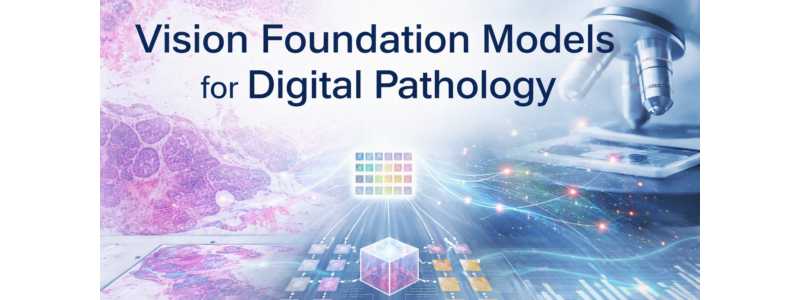
Application of Vision Foundation Models in Computational Pathology
This workshop provides a hands-on introduction to applying vision foundation models (VFMs) in digital pathology, with techniques that are broadly applicable across other image-based domains. VFMs are large-scale vision architectures pre-trained on diverse, high-volume whole slide image corpora to produce reusable visual representations that capture broadly applicable semantic and structural information across image domains. In digital pathology, VFMs are trained on massive collections of histopathology image patches, claiming robust, domain-specific feature extraction. In this workshop, we utilize fixed pre-trained embeddings to study downstream prediction tasks, explicitly focusing on the representational capacity of foundation models. The emphasis lies on keeping model development cycles short and on producing meaningful results on relevant downstream tasks in digital pathology.
Topics:
- Vision foundation models for digital pathology: overview of pretrained VFM architectures (with a focus on UNI2) and their representational properties in histopathology.
- Fixed-feature learning and embedding-based pipelines: use of frozen VFM embeddings for downstream prediction, avoiding end-to-end retraining while enabling rapid experimentation.
- Downstream evaluation: practical application of VFM embeddings to digital pathology tasks, with emphasis on reproducibility and efficient model development cycles.
Application of Vision Foundation Models in Computational Pathology
This workshop provides a hands-on introduction to applying vision foundation models (VFMs) in digital pathology, with techniques that are broadly applicable across other image-based domains. VFMs are large-scale vision architectures pre-trained on diverse, high-volume whole slide image corpora to produce reusable visual representations that capture broadly applicable semantic and structural information across image domains. In digital pathology, VFMs are trained on massive collections of histopathology image patches, claiming robust, domain-specific feature extraction. In this workshop, we utilize fixed pre-trained embeddings to study downstream prediction tasks, explicitly focusing on the representational capacity of foundation models. The emphasis lies on keeping model development cycles short and on producing meaningful results on relevant downstream tasks in digital pathology.
Topics:
- Vision foundation models for digital pathology: overview of pretrained VFM architectures (with a focus on UNI2) and their representational properties in histopathology.
- Fixed-feature learning and embedding-based pipelines: use of frozen VFM embeddings for downstream prediction, avoiding end-to-end retraining while enabling rapid experimentation.
- Downstream evaluation: practical application of VFM embeddings to digital pathology tasks, with emphasis on reproducibility and efficient model development cycles.
Instructor: Dr. Patrick Fuhlert, Institute of Medical Systems Bioinformatics, UKE
Generative KI und die Verführung der Reibungslosigkeit
Vortrag von Prof. Dr. Judith Simon
Die breite Nutzung Generativer KI setzt gesellschaftliche Praktiken vielfach unter Druck: im Öffentlichen und Privaten, in Bildung und Wissenschaft, in Wirtschaft, Journalismus und Politik. In diesem Vortrag werden mit Hilfe des Konzepts der Reibungslosigkeit sowohl die Ursachen als auch die epistemischen, ethischen und gesellschaftlichen Konsequenzen dieser Disruption analysiert.
Judith Simon ist Professorin für Ethik der Informationstechnologien an der Universität Hamburg. Sie forscht zu ethischen, erkenntnistheoretischen und politischen Fragestellungen, welche sich durch digitale Technologien und künstliche Intelligenz ergeben sowie zur Philosophie des Vertrauens. Bis Juni 2026 war sie stellvertretende Vorsitzende des Deutschen Ethikrats. Im selben Monat wurde sie in das AI Act Scientific Panel der Europäischen Kommission berufen.
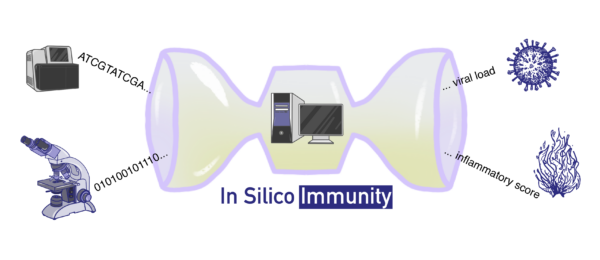
In Silico Immunity: Use Your Computer to Detect or Treat Infection and Inflammation
learn_bAIome offers workshops and trainings in biomedical AI/data science with tailored formats that take into account background, programming skills and intensity to provide unique, focused, and effective courses. These courses are free and open to students, clinicians, and researchers across academic institutions in Hamburg.
Lecturer: Dr. Lorenz Adlung, I. Department of Medicine, Hamburg Center for Translational Immunology (HCTI), bAIome, UKE
Prerequisites: Intrinsic motivation to learn about infection and inflammation using your computer.
Description: This workshop is open to all students, researchers and clinicians who want to learn how we use (“big”?) data and computational modelling for discovery and rational intervention in infection and inflammation. In today’s biomedical research, the bottleneck has shifted, and for the first time, data generation is no longer the rate-limiting step in scientific progress, but rather: data analysis. We will discuss current trends and show how we can use mathematical concepts and analytical thinking to address unmet clinical needs in influenza infection and inflammatory bowel disease. The workshop will be in presence and therefore each participant should bring their own laptop or ipad.
Topics
- “big” data and code repositories
- mathematical concepts relevant to infection and inflammation
- computational modelling of murine influenza infection
- identification of treatment responders in inflammatory bowel disease
- discussion of the future of bAIomedical research
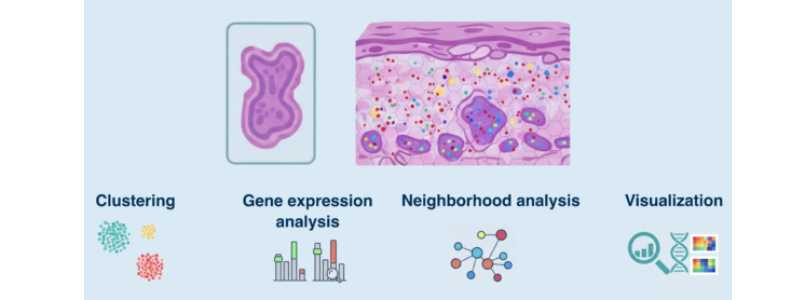
Introduction to analysis of (single-cell) spatial transcriptomics data
This workshop will focus on the analysis of spatial transcriptomics data. Participants will receive an introduction to spatial transcriptomics (particularly, the Visium and Xenium platforms from 10x Genomics) and a comprehensive hands-on session to understand the data analysis process. The workshop will cover key concepts, including data visualization, interpretation of gene expression patterns and spatial proximities, and clustering analyses.
Topics:
- Introduction to spatial transcriptomics platforms
- Methodological foundations
- Data visualisation
- Expression pattern interpretation
- Tutorial I – Preprocessing, implementation and evaluation metrics
- Tutorial II – Analysis, biological interpretation and discussion
Registration for this workshop will open soon.
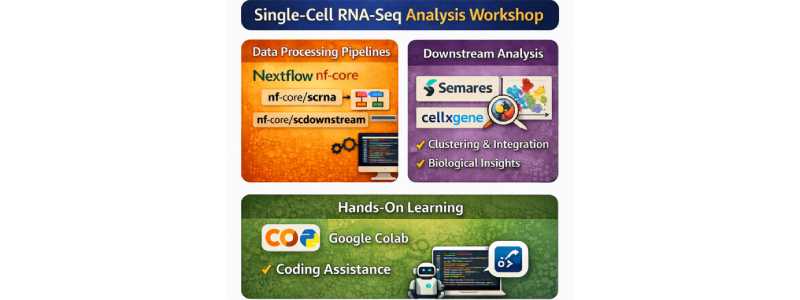
Introduction to analysis of single cell RNA data
This two-day workshop provides a structured introduction to single-cell RNA-sequencing (scRNA-seq) analysis, combining theoretical foundations with practical exercises to help participants understand and interpret scRNA-seq data. The theoretical components will present the complete conceptual workflow—from experimental design considerations to raw data processing, quality control, normalization, dimensionality reduction, clustering, and data integration. These sessions will guide attendees in evaluating scRNA-seq datasets, understanding the reasoning behind each part of the workflow, and selecting methods that lead to reliable biological insights.
The practical components translate these concepts into hands-on skills through guided exercises, primarily in Google Colab. Participants will become familiar with the Nextflow workflow manager, explore nf-core pipelines such as nf-core/scrna and nf-core/scdownstream, and learn to understand the structure and meaning of the results. They will also review data integration using the Semares platform and Cellxgene explorer, and perform custom downstream analyses in Scanpy. AI-assisted coding support will help attendees create their own analysis functions in Python and develop custom analysis, even with limited programming experience. The workshop will enable participants to complete an end-to-end analysis and prepare them to apply modern scRNA-seq methodologies to their own datasets.
Topics: here
Introduction to Data Wrangling and Visualization in R
“Visualization gives you answers to questions you didn’t know you had.” – Ben Shneiderman.
Exploratory data analysis is a critical step in any successful project. Turning raw data into insights requires a clear process: data wrangling to organize and clean the data, exploratory analysis to uncover patterns, and finally, visualization to effectively communicate your findings. This beginner-friendly workshop on Data Wrangling and Visualization in R is designed to guide participants through these essential steps with practical, hands-on examples. No prior programming experience is required. On the first day, we will introduce the R programming language and its fundamental features. The second and third days will focus on mastering data wrangling using the dplyr package and creating customizable, publication-ready plots with ggplot2, specifically tailored to bioinformatics applications. Additionally, the workshop will include an introduction to R Markdown, enabling participants to create reproducible reports that seamlessly combine code, plots, and analysis insights in a single document. By the end of the workshop, participants will have the skills to perform data wrangling with dplyr, create compelling visualizations with ggplot2, and produce reproducible reports using R Markdown, setting a strong foundation for their data analysis projects.
Topics:
- Introduction to R and R studio
- Basics of R programming
- Importing data from different file types
- Introduction to tidyverse
- Data wrangling with dplyr
- Combining datasets
- Grammar of graphics ggplot2
- Basic plot types, Customizing plots
- R Markdown for creating reports
Due to popular demand registration for this workshop has now closed.
Language: English
Prerequisites: A laptop with Rstudio installed, Enthusiasm
Introduction to Data Wrangling and Visualization in R
“Visualization gives you answers to questions you didn’t know you had.” – Ben Shneiderman.
Exploratory data analysis is a critical step in any successful project. Turning raw data into insights requires a clear process: data wrangling to organize and clean the data, exploratory analysis to uncover patterns, and finally, visualization to effectively communicate your findings. This beginner-friendly workshop on Data Wrangling and Visualization in R is designed to guide participants through these essential steps with practical, hands-on examples. No prior programming experience is required. On the first day, we will introduce the R programming language and its fundamental features. The second and third days will focus on mastering data wrangling using the dplyr package and creating customizable, publication-ready plots with ggplot2, specifically tailored to bioinformatics applications. Additionally, the workshop will include an introduction to R Markdown, enabling participants to create reproducible reports that seamlessly combine code, plots, and analysis insights in a single document. By the end of the workshop, participants will have the skills to perform data wrangling with dplyr, create compelling visualizations with ggplot2, and produce reproducible reports using R Markdown, setting a strong foundation for their data analysis projects.
Topics: here
Due to popular demand registration for this workshop has now closed.
Prerequisites: A laptop with Rstudio installed, Enthusiasm
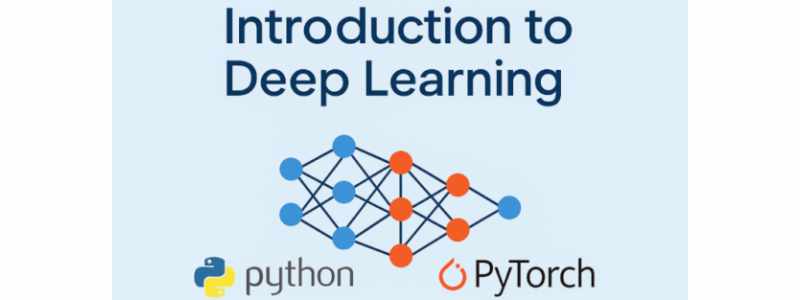
Introduction to Deep Learning in Python
This workshop is open to students, researchers, and clinicians keen to learn the essentials of deep learning (DL) and implementing it via Python. The aim of the course is to provide an introduction to DL especially for those who want to dive into the field of AI and use it in their projects. During the workshop, we will focus on fundamentals of DL, where to use these methods, and how to implement them in Python by practicing on real life data. Therefore, a basic knowledge of python is required. The students will also get familiarized with the Python package of Pytorch, which is the top used package for DL. The workshop will be in presence and each participant should bring their own laptop.
Topics: here
Registration for this workshop is now open
Language: English
Prerequisites: A laptop with Rstudio installed, Enthusiasm
Introduction to Deep Learning in Python
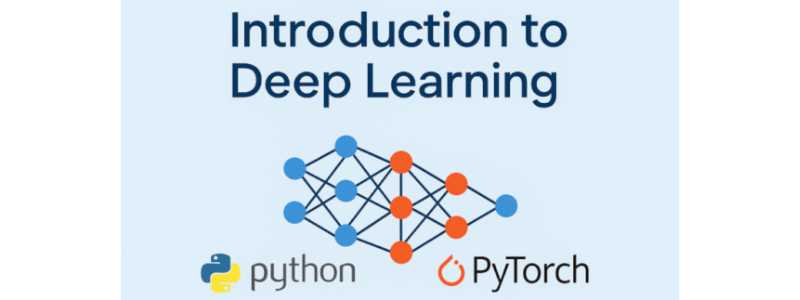
This workshop is open to students, researchers, and clinicians keen to learn the essentials of deep learning (DL) and implementing it via Python. The aim of the course is to provide an introduction to DL especially for those who want to dive into the field of AI and use it in their projects. During the workshop, we will focus on fundamentals of DL, where to use these methods, and how to implement them in Python by practicing on real life data. Therefore, a basic knowledge of python is required. The students will also get familiarized with the Python package of Pytorch, which is the top used package for DL. The workshop will be in presence and each participant should bring their own laptop.
Topics:
- Basics of machine learning and deep learning;
- The Perceptron and the multilayer Perceptron;
- Autoencoders and embedding space;
- Convolutional neural networks;
- Model optimization and evaluation;
- More advanced topics, time allowing
Prerequisites: Experience working in Python
Instructor: Dr. Behnam Yousefi, Institute of Medical Systems Bioinformatics, UKE
Introduction to Deep Learning in Python
This workshop is open to students, researchers, and clinicians keen to learn the essentials of deep learning (DL) and implementing it via Python. The aim of the course is to provide an introduction to DL especially for those who want to dive into the field of AI and use it in their projects. During the workshop, we will focus on fundamentals of DL, where to use these methods, and how to implement them in Python by practicing on real life data. Therefore, a basic knowledge of python is required. The students will also get familiarized with the Python package of Pytorch, which is the top used package for DL. The workshop will be in presence and each participant should bring their own laptop.
Topics:
- Basics of machine learning and deep learning;
- The Perceptron and the multilayer Perceptron;
- Autoencoders and embedding space;
- Convolutional neural networks;
- Model optimization and evaluation;
- More advanced topics, time allowing
Prerequisites: Experience working in Python
Introduction to Learning from Graph-Structured Data
Instructor: Dr. Lucia Testa, Institute of Medical Systems Bioinformatics, UKE
The aim of the course is to provide an introduction to graph-based tools. Many real-world systems, including biological networks, molecular structures, and social interactions, are naturally represented as graphs. The workshop will introduce the fundamental concepts behind learning on graphs with a focus on graph theory, graph signal processing and graph neural networks. Participants will learn the mathematical foundations of graph-based learning and gain practical experience implementing models using PyTorch and PyTorch geometric. The course will combine theoretical explanations with hands-on tutorials. The workshop will be in presence and each participant should bring their own laptop.
Topics:
- Introduction to graph-structured data
- Fundamentals of graph signal processing
- Message passing and Graph Neural Networks
- Graph-level learning
- Implementing Graph Neural Networks
- Training and evaluating models on real datasets
Registration for this workshop is now open!
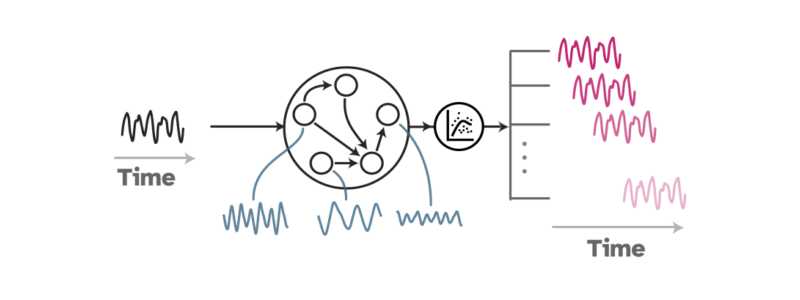
Introduction to Recurrent Neural Networks (RNNs) and their Applications
This workshop is open to students, researchers, and clinicians wanting to learn about recurrent neural networks (RNNs) and their applications in biomedical signal processing. RNNs are vital tools in the field of neural networks, especially known for their capability to manage sequential data. This workshop will provide an accessible introduction to RNNs, concentrating on their core concepts and various applications. We will explore how RNNs excel at capturing temporal dependencies through their unique recurrent connections, making them highly effective for a variety of tasks. Participants can expect to achieve a solid understanding of the basic principles and architecture of RNNs as well as the ability to identify suitable applications for RNNs and implement basic RNN models. The workshop will be in presence and therefore each participant should bring their own laptop (no ipads).
Topics:
- Overview of RNN fundamentals and how they differ from other neural networks
- Key applications of RNNs in biomedical signal processing
- Reservoir computing (RC)
- Hands-on exercises and examples to illustrate RNN implementation and usage
Prerequisites: A basic understanding of neural networks and machine learning concepts is expected as well as a familiarity with Python and basic programming skills.
Lecturer: Dr. Fatemeh Hadaeghi, Institute of Computational Neuroscience, UKE
Introduction to Recurrent Neural Networks (RNNs) and their Applications
Prerequisites: A basic understanding of neural networks and machine learning concepts is expected as well as a familiarity with Python and basic programming skills.
Description:
This workshop is open to students, researchers, and clinicians wanting to learn about recurrent neural networks (RNNs) and their applications in biomedical signal processing. RNNs are vital tools in the field of neural networks, especially known for their capability to manage sequential data. This workshop will provide an accessible introduction to RNNs, concentrating on their core concepts and various applications. We will explore how RNNs excel at capturing temporal dependencies through their unique recurrent connections, making them highly effective for a variety of tasks. Participants can expect to achieve a solid understanding of the basic principles and architecture of RNNs as well as the ability to identify suitable applications for RNNs and implement basic RNN models. The workshop will be in presence and therefore each participant should bring their own laptop (no ipads).
Topics:
- Overview of RNN fundamentals and how they differ from other neural networks
- Key applications of RNNs in biomedical signal processing
- Reservoir computing (RC)
- Hands-on exercises and examples to illustrate RNN implementation and usage
KI für die Wissenschaften: Auf dem Weg zum Verständnis
Vortrag von Prof. Dr. Klaus-Robert Müller
In den letzten Jahren spielen Methoden des maschinellen Lernens (ML) und der künstlichen Intelligenz (KI) in der Wissenschaft und in der Industrie eine immer wichtigere Rolle. Insbesondere das Aufkommen großer und / oder komplexer Datensätze hat neue technologische Herausforderungen und Möglichkeiten mit sich gebracht.
In diesem Vortrag wird auf das Thema „ML-Anwendungen in den Wissenschaften“ eingegangen, insbesondere in der Medizin und, sofern es die Zeit erlaubt, auch in der Chemie. Zudem werden Möglichkeiten erörtert, wie Informationen aus Machine-Learning-Modellen gewonnen werden können, um unser Verständnis nichtlinearer ML-Modelle zu vertiefen. Abschließend geht es kurz um Perspektiven und Grenzen der Anwendungen.
Klaus-Robert Müller ist Professor für Maschinelles Lernen an der TU Berlin und an der Korea University in Seoul. Er ist Direktor von BIFOLD, einem der fünf dauerhaft geförderten deutschen nationalen KI-Zentren. Er ist Mitglied der Leopoldina, der Berlin-Brandenburgischen Akademie der Wissenschaften und von Acatech sowie externes wissenschaftliches Mitglied der Max-Planck-Gesellschaft. Unter anderem erhielt er den Berliner Wissenschaftspreis, den Vodafone Innovationspreis, den Hector Wissenschaftspreis, den Feynman Preis, den IEEE CIS NeuralNetwork PioneerAward und den Gottfried Wilhelm Leibniz-Preis. Seit 2019 wurde er fortlaufend als „ISI HighlyCitedResearcher“ ausgezeichnet. Seine Forschungsinteressen liegen in den Bereichen KI für die Wissenschaften sowie Grundlagen der KI.
KI-Biases verstehen und vermeiden
Sie arbeiten mit ChatGPT, DALL-E oder Midjourney und wollen sichergehen, dass Ihre KI-generierten Inhalte wirklich fair und ausgewogen sind? Dann ist dieser Intensivkurs genau das Richtige für Sie. In nur zwei Wochen lernen Sie interaktiv und abwechslungsreich was Biases sind, wie sie sich in KI-Modellen und Tools auswirken und wie sie damit effektiv umgehen können.
In Woche 1 erfahren nicht nur, wie KI-Systeme Verzerrungen entwickeln – Sie lernen auch, diese gezielt zu erkennen. In spannenden Praxis-Sessions schlüpfen Sie selbst in die Rolle der KI und verstehen, wie Bias in Texten und Bildern entsteht.
In Woche zwei wird es noch praktischer: Sie lernen konkrete Strategien kennen, mit denen Sie Bias in Ihren KI-Projekten minimieren. Von cleveren Prompt-Engineering-Techniken bis hin zur kritischen Bewertung von KI-Outputs.
Dieser Kurs ist für alle, die KI verantwortungsvoll einsetzen wollen, aber vor allem für Anfänger und Laien. Mit nur 3-4 Stunden pro Woche integrieren Sie das Training flexibel in Ihren Alltag.
Dieser kostenlose Online-Kurs wird vom KI-Servicezentrum Berlin Brandenburg unterstützt und vom Bundesministerium für Bildung und Forschung gefördert.
Institutions
- openHPI
KI-STE AUF! Wie funktionieren große Sprachmodelle?
Vortrag von Prof. Dr. Chris Biemann
Sogenannte große Sprachmodelle wie ChatGPT, Claude oder DeepSeek sind mittlerweile in unserem Alltag angekommen. Sie können menschliche Sprache nicht nur verstehen, sondern auch generieren und verfügen dabei über ein scheinbar grenzenloses Wissen.
In diesem Vortrag tasten wir uns an die Funktionsweise dieser Sprachmodelle heran. Wie verlief die Entwicklung von einfacher Statistik bis hin zu (künstlich) intelligenten ChatBots? Welche Mechanismen, welche technischen Voraussetzungen und welches menschliche Feedback sind nötig, um das inzwischen verfügbare hohe Niveau an Sprachkompetenz zu erreichen? Was machen diese Modelle noch falsch und wie sehen die vorhersehbaren Entwicklungen der nächsten Jahre aus?
Seit 2016 forscht Chris Biemann als Professor für Sprachtechnologie im Fachbereich Informatik an der Universität Hamburg an den Grundlagen der Sprachverarbeitung. Seit 2021 ist er auch Direktor im Hub of Computing and Data Science. In dieser Funktion gestaltet er die digitale Transformation in der Forschung für alle Fachdisziplinen durch methodischen Service. Er ist seit 2025 Mitglied der Akademie der Wissenschaften in Hamburg und leitet zusammen mit Ingrid Schröder und Sarah Ihden das Langzeitvorhaben MiNGra – Mittelniederdeutsche Grammatik.

Universität Hamburg
Adeline Scharfenberg