machine learning
Events

Launch of 2026 ITU GeoAI Challenge: Reaching new heights with GeoFM embeddings
The International Telecommunication Union (ITU) is launching the fourth edition of the GeoAI Challenge, inviting students and professionals worldwide to tackle real‑world geospatial problems using artificial intelligence (AI) and machine learning (ML) to support advance solutions to solve global challenges.
This session introduces the challenge problem statement “Reaching new heights with GeoFM embeddings”, developed in cooperation with the European Space Agency (ESA) Φ‑lab Challenges, KTH Royal Institute of Technology, Politecnico di Milano, and the Group on Earth Observation (GEO).
The project represents an important first step toward building a global open dataset of Digital Surface Models (DSM), Digital Terrain Models (DTM), and ground‑cover categories derived solely from open satellite imagery. Participants will train models on selected regions and assess their ability to generalize across diverse geographical areas. Such datasets enable a wide range of SDG‑relevant applications.
For ITU, global geospatial datasets are essential to improve the accuracy of ITU‑R radio‑wave propagation prediction methods, which support spectrum sharing studies, radio‑interference assessment, and coverage estimation for point‑to‑area services such as mobile and broadcasting systems.
Institutions
- AI for Good
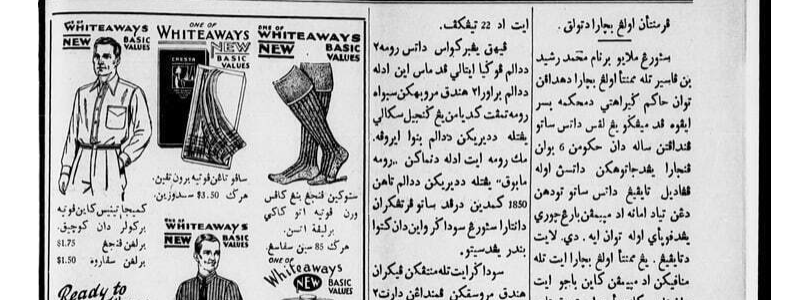
Lecture (in-site): "Towards machine-readable Jawi Newspapers using bespoke AI models"
In the century between the 1870s and the 1970s, hundreds of Malay-language periodicals circulated around the Malay-speaking world. These periodicals chronicle a fascinating era and have been the focus of intense study by scholars such as William Roff and Ian Proudfoot. Many of these periodicals have been digitized, and comprehensive collections are at the National Library of Singapore, as well as in other libraries and archives.
Given the availability and size of the collections, the opportunity is ripe for systematic digital analysis. Projects elsewhere in the world have demonstrated the power of analysing historical newspapers at scale using computational methods. Examples include "Living With Machines" (a partnership between the British Library and several universities in the UK) and "Oceanic Exchanges" (a partnership between Finland, Germany, Mexico, the Netherlands, the United Kingdom, and the United States).
What is holding back a similar study of Malay-language newspapers?
– The main obstacle is the script. The majority of these periodicals were published in Jawi, an adaptation of the Perso-Arabic script for the Malay language, which poses significant challenges for digital processing. For one thing, typical Optical Character Recognition pipelines (OCR) don't work well for Jawi.
– Another challenge is that most contemporary Malay readers, including many historians who would be interested in these collections, are less familiar with Jawi than with Rumi (the Romanized version of Malay most commonly used today). The automatic transliteration from Jawi to Rumi is also a complex task, as vowels are often not marked down in Jawi.
– In addition to this, spelling conventions have changed, and there are many different approaches for transliterating the same word.
To address these challenges, the "Computational Heritage" research group at the National University of Singapore has developed specialized AI models for both Jawi OCR and Jawi-to-Rumi transliteration. In this talk, I will describe our progress so far, the challenges we still face and the future directions of our work.
Institutions
- Department for Languages and Cultures of Southeast Asia, Asia-Africa-Institute (AAI), UHH

Lecture Series: Business Analytics und Data Science
Learning to Optimize: How Machine Learning Drives Decisions at Companies like Uber
Have you ever wondered why and where taxi cars wait, or how smart Uber drivers make their decisions? This talk will delve into these intriguing questions. We will explore the concept of sequential decision-making and policy classes through a hands-on approach. Using taxi services as an example, we learn how service providers can optimize their decision-making. And guess what? There´s not as much magic behind it as you might think...so prepare to be surprised!
Distinguished Lecture Series in Business Analytics & Data Science
The Distinguished Lecture Series in Business Analytics & Data Science at Kühne Logistics University (KLU) presents public lectures on selected topics in analytics, data science, and their applications across various industries, including logistics and supply chain management. Targeted at students, alumni, industry professionals, and other interested individuals, the series offers insights into the latest advancements, trends, and challenges in these fields. Attendees gain valuable knowledge on how data-driven decision-making can transform business operations and enhance efficiency in today's digital economy.
Institution
- Kühne Logistics University (KLU)
Lecture Series: Business Analytics und Data Science - "Business Analysis without Data"
This talk explores analytic methods that prioritize theory over pure data accumulation. It deep dives into game theory by dissecting the principal-agent model to reveal hidden strategic dynamics. Ultimately, the presentation underscores that thoughtful analysis provides robust decision-making tools where data is scarce. Attendees gain valuable knowledge on how data-driven decision-making can transform business operations and enhance efficiency in today's digital economy.
Event free of charge, register here
Distinguished Lecture Series in Business Analytics & Data Science
The Distinguished Lecture Series in Business Analytics & Data Science at Kühne Logistics University (KLU) presents public lectures on selected topics in analytics, data science, and their applications across various industries, including logistics and supply chain management. Targeted at students, alumni, industry professionals, and other interested individuals, the series offers insights into the latest advancements, trends, and challenges in these fields. Attendees gain valuable knowledge on how data-driven decision-making can transform business operations and enhance efficiency in today's digital economy.
Institutions
- Kühne Logistics University (KLU)
LLMs & Agents in Fundamental Physics & Mathematics
Programm
- 09:00 → 09:15 Welcome & Intro 15m / Sprecher: Gregor Kasieczka (Universität Hamburg)
- 09:15 → 09:45 Best Practices / Guidelines / UHH Rules (HCDS, TBC) 30m
- 09:45 → 10:50 Usage examples (short contributed talks) 1 h 5m
- 10:50 → 11:20 Coffee Break 30m
- 11:20 → 12:00 Discussion
Institutions
- Institute of Experimental Physics (MIN), Hamburg University
Machine Learning for high-resolution snow science
The Arctic is warming at least two to four times as fast as the global average. This leads to an increase in extreme events and changes in the spatial patterns of snow cover, directly affecting transportation, health, and the economic situation of northern communities. Due to their increased vulnerability, accurate information on snow conditions is needed to adequately mitigate the impacts of climate change on these communities. However, there is a lack of high spatial and temporal resolution information on snow cover in the Arctic.
This seminar will present a methodology using machine learning algorithms trained with on-site airborne LIDAR for 1 meter resolution snow depth predictions, to create snow depth maps for use by Inuit communities and with their cooperation. Preliminary results show a R^2 of 0.95 for a Random Forest model using topographical features, while being orders of magnitude faster than physics-based models.

Machine Learning in Practice (intermediate level)
learn_bAIome offers workshops and trainings in biomedical AI/data science with tailored formats that take into account background, programming skills and intensity to provide unique, focused, and effective courses. These courses are free and open to students, clinicians, and researchers across academic institutions in Hamburg.
This workshop is open to students, researchers, and clinicians wanting to learn how machine learning is applied for biomedical datasets, the different classes of machine learning algorithms that may be used, as well as the best practices in selecting and evaluating algorithms, and their limitations. The aim of the course is to provide concepts and tools to navigate the use of machine learning in the biomedical landscape. The course will use biological datasets and there will be hands-on components as well as discussions. Participants should already have taken an introduction to machine learning and be familiar with Python programming. The workshop will be in presence and therefore each participant should bring their own laptop (no ipads).
Topics
- Taxonomy of machine learning algorithms
- Linear regression, logistic regression and related methods
- Decision trees
- Support Vector Machines
- Bias & Variance, curse of dimensionality
- Representation learning
- Neural networks and deep learning: MLPs, transformers, CNNs
- Applications to RNAseq and imaging data
Machine learning of MCMV infection dynamics - BNITM seminar series "AI in Biology and Medicine".
bAIome Center for biomedical AI (UKE) and Bernhard Nocht Institute for Tropical Medicine (BNITM) will host the seminar series entitled “AI in biology and Medicine”. This series aims to capture a broad audience and promote cross institutional collaboration. Our expert speakers will give an overview and insight into particular AI/data science methods being developed in key areas of biology and medicine. We will have drinks and snacks following each seminar to facilitate exchange.
Lorenz Adlung, I Medical Clinic and Polyclinic, UKE: Machine learning of MCMV infection dynamics
For further details and hybrid links, please go to the webpage AI in Biology & Medicine
Mapping connectivity for saving lives: The early warning connectivity map (EWCM)
Despite the global expansion of mobile and internet networks, critical connectivity gaps persist – particularly in areas most vulnerable to natural hazards and other emergencies. Reaching these populations with timely early warnings remains a pressing challenge for achieving the UN Early Warnings for All (EW4All) initiative.
Approximately 97.9% of the world’s population is covered by mobile network technology, gaps remain, leaving millions without reliable access to life-saving communications.
To address this challenge, the Telecommunication Development Bureau (BDT) of the International Telecommunication Union (ITU), in partnership with Microsoft AI for Good Lab, Planet Labs and the Institute of Health Metrics and Evaluation (IHME) at the University of Washington, has developed the Early Warning Connectivity Map (EWCM). This geospatial tool integrates connectivity and coverage datasets with high-resolution population density and hazard exposure datasets to produce granular, subnational maps that identify connectivity ‘coldspots’.
The EWCM helps ICT regulators and national stakeholders to visualize where connectivity investments or alternative communication solutions – such as radio or satellite – are needed to ensure access to early warnings. This session will showcase the EWCM using a case study from Liberia, illustrating its value for strengthening early warning systems nationally. Learn more
Institutions
- AI for Good
Meet the startups advancing accessible and affordable healthcare solutions
This is a global startup pitching session to find the most promising solutions using AI to address challenges in the healthcare sector. The competition is open to any innovative startups using artificial intelligence, machine learning, and advanced algorithms to improve the access and affordability of healthcare services around the world. It focuses on AI for global health improvement, making AI solutions accessible and impactful across diverse health systems, particularly in low-resource settings and through integration into existing healthcare systems.
Benefits for startups
The Winner of the session receives:
- AI for Good Innovation Factory Grand Finale ticket at the AI for Good Global Summit 2026
- Speaker Pass to attend the AI for Good Global Summit 2026
- Startup pod at the AI for Good Global Summit 2026
- Pitching opportunity in the Frontier Stage at the AI for Good Global Summit 2026
- Exclusive access to the AI for Good Innovation Factory Startup Accelerator Programme 2026
- Featured startup in the Innovation Factory Exhibition on the AI for Good Neural Network
- Exclusive follow-up mentoring from judges after the session
- Exclusive access to AI for Good Innovation Factory Alumni Network
- Networking opportunities with the UN and other potential business partners
Institutions
- AI for Good

ML deployment with AWS
Tentative agenda for the AWS Immersion Day on May 31st
|
Time |
Title |
Type |
|
10:00 am |
Introduction to ML on AWS: Amazon SageMaker and managed services. |
Presentation |
|
10:30 am |
Training and Deploying models on Amazon SageMaker |
Presentation |
|
11:00 am |
Account claiming and first lab |
LAB |
|
11:45 am |
Break |
|
|
12:00 pm |
Second Lab |
LAB |
|
12:40 pm |
Advanced topics (MLOps), and final Q&A |
Presentation |
It will be assumed that participants know basic Python, know how to work on a Jupyter Notebook, understand basic commands on libraries such as Pandas and SciKit Learn, and have a high level understanding of what is Pytorch/ Tensorflow. Each participant will be given an test AWS account that will be active until Friday afternoon so it is suggested that each participant works on its own laptop. We will do 2 labs together, but there will more labs available for those interested into doing further tests or exploring other features not covered during the 3 hours.
In order to participate, please send your first name and email address to adeline.scharfenberg@uni-hamburg.de
ML4CPS – Machine Learning for Cyber-Physical Systems
Cyber-physical systems are required to adapt to changing demands, often experience architectural changes over their lifetime, and generate a heterogeneous set of data. All of this leads to significant demands on monitoring and control software. This conference focuses on aspects of machine learning and related domains, such as predictive maintenance, self-optimization, fault diagnosis, re-planning, and reconfiguration. To build intelligent cyber-physical systems close cooperation between AI-research and industrial engineering is necessary. To facilitate such an exchange is the goal of this conference.
Register here: Registration
The 9th Machine Learning for Cyber Physical Systems (ML4CPS) conference offers researchers and users from various fields an exchange platform. The conference will take place March 2026, 19th till 20th at the Fraunhofer Forum in Berlin. Hosts are Fraunhofer IOSB, Helmut Schmidt University, Hamburg University of Technology, and the Chair of Production Engineering of E-Mobility Components (PEM) of RWTH Aachen.
In this year’s edition of the conference we also encourage submission of contributions from industry detailing scientific problems they encounter. To contribute, an extended abstract of a maximum of one page is required and must be submitted through the conference portal.
Institutions
- Fraunhofer IOSB
- Helmut-Schmidt-Universität Hamburg
- RWTH Aachen
- Hamburg University of Technology (TUHH)
MLE Days 2023 - Summer School and Conference for Machine Learning in Engineering
On September, 25th to 27th, 2023 the third MLE Days on machine learning in engineering will take place on the campus of the Hamburg University of Technology (TUHH). This year, it combines a summer school with a one-day startup-challenge. Participation is free of charge.
The Summer School teaches insights into the world of machine learning with a focus on engineering. It provides sessions about fundamentals of machine learning, concrete application examples, as well as hands-on sessions to try out and consolidate lessons learned. Keynote talks complete the program. Three parallel tracks are provided to allow participants to choose contributions adapted to their interest and machine learning experience. The use cases range from sensor and image processing, to electrical engineering and materials science, to aviation and maritime logistics. A poster session and an elevator pitch event allow participants to present their own work on machine learning topics. The best posters and pitches will be selected by a jury and awarded prizes. A networking event allows attendees to establish contacts with selected corporate partners and sponsors from start-ups and medium-sized businesses to large corporations. In the startup-challenge attendees learn how to turn machine learning ideas into a business.
The MLE Days are organized by the Machine Learning in Engineering research initiative of the TUHH (MLE@TUHH) in collaboration with the Helmholtz Center Hereon, DASHH, and the Career Center of TUHH, the AI.Startup.Hub, and AI.HAMBURG. The MLE initiative joins the competencies in the field of machine learning at the Hamburg University of Technology with the goal of transferring knowledge towards business and industry. Students, PhD students, postdocs, and professors from all disciplines of the TUHH are engaged together with colleagues from the Helmholtz Center Hereon to make methods and applications of machine learning known, to network, and to foster scientific exchange.
Join us to discover the new applications of machine learning in engineering practice!
Institutions
- Hamburg University of Technology (TUHH)
MLE Days 2025
The Machine Learning in Engineering (MLE) initiative integrates competencies and activities in the field of machine learning at Hamburg University of Technology (TUHH) and partner organizations from the Hamburg metropolitan area. Within the Machine Learning in Engineering (MLE) initiative, students, doctoral candidates, postdocs, researchers, and professors from all departments at the TUHH and from the partners are working interdisciplinary together. The aim is to conduct fundamental research particularly relevant for the development of new technology, thereby contributing to the digital transformation of the engineering sciences. In addition to basic research, the initiative aims at transferring knowledge to business and industry. Among a number of instruments for this kind of transfer, the annually organised MLE days provide a natural opportunity for education and knowledge exchange.
Registration: If you want to attend, please, send an email to Ulrike Schneider (in cc) with your name and affiliation. The registration is open until 01.03.2025. The number of participants is limited by the size of the lecture hall. For guaranteeing your participation and to make planning (particularly of the coffee breaks) easier, please register as soon as possible. Your data will only be used for organizing the MLE Days.
Program (preliminary):
09:00-15:00: Presentations by MLE-members and partners following the updated MLE structure here
15:00-17:00: Poster & Networking session
Catering: There will be a coffee break in the morning and afternoon with hot drinks and snacks. Lunch in the canteen is to be paid for by the participants themselves.
Poster in English until 14.02.2025.
The organizing committee reserves the right to reject registrations and poster contributions. If you have any questions, please do not hesitate to contact the organizing team via mle@tuhh.de .
Institutions
- Hamburg University of Technology (TUHH)

Modeling population dynamics with AI: A hands-on workshop with the Population Dynamics Foundation Model
Explore the transformative potential of the Population Dynamics Foundation Model (PDFM), a cutting-edge AI model designed to capture complex, multidimensional interactions among human behaviors, environmental factors, and local contexts. This workshop provides an in-depth introduction to PDFM Embeddings and their applications in geospatial analysis, public health, and socioeconomic modeling.
Participants will gain hands-on experience with PDFM Embeddings to perform advanced geospatial predictions and analyses while ensuring privacy through the use of aggregated data. Key components of the workshop include:
- Introduction to PDFM Embeddings: Delve into the model architecture of PDFM and discover how aggregated data (such as search trends, busyness levels, and weather conditions) generates location-specific embeddings.
- Data Preparation: Learn to integrate ground truth data, including health statistics and socioeconomic indicators, with PDFM Embeddings at the postal code or county level.
- Hands-On Exercises: Engage with interactive Colab notebooks to explore real-world applications, such as predicting housing prices using Zillow data and nighttime light predictions with Google Earth Engine data.
- Visualization and Interpretation: Analyze and visualize geospatial predictions and PDFM features in 3D, enhancing your ability to interpret complex datasets.
By the end of this workshop, participants will have a strong foundation in utilizing PDFM Embeddings to address real-world geospatial challenges.
Institution
- AI for Good

MT Marathon 2025 in Helsinki
This is the first call for participation on the 18th MT Marathon that will take place in Helsinki on August 25-29, 2025. The eighteenth edition of the MT Marathon will be organized by the Language Technology Research group at the University of Helsinki, Finland, with sponsorship of EAMT.
Each Machine Translation Marathon is a week-long gathering of machine translation researchers, developers, students and users featuring:
- MT Lectures and Labs covering the basics and tutorials.
- Keynote Talks from experienced researchers and practitioners.
- Presentations of research and open source tools related to MT.
- Hacking Projects to advance tools or research in one week or start new collaborations.
The registration is free of charge for EAMT members. The programme is still under construction.
Projects
We collect and share proposed projects before the Marathon, and the project topics are settled on the first day. Usually, most of the projects actually make it to the final presentation and some continue even (long) after the Marathon. More details will be added later.
Open Session
The MT Marathon will again host an open session with poster presentations related to MT/NLP research and open-source tools. We invite students, developers and researchers to submit short abstracts (1 page) featuring previously published results, open-source tool demos, and work in progress. Abstracts are lightly reviewed for topical scope, and all relevant submissions will be accepted for presentation.
Information about submission procedures will be announced later.
Institutions
- Technology Research group at the University of Helsinki
People

Lennart Wittkuhn
Maya Topf
Institutions
Max Planck Institute for the Structure and Dynamics of Matter
Scientific Support Unit researching the use of computation to accelerate and support research.
MLE Machine Learning in Engineering
MLE ist eine Initiative zur Bündelung der Kompetenzen im Bereich Machine Learning an der Technischen Universität Hamburg mit dem Ziel des Wissenstransfers in Richtung Wirtschaft und Industrie.

Universität Hamburg
Adeline Scharfenberg