generative ai
Events

Let's write! Einführung in KI-Text-Generatoren
In dieser Online-Schulung geben wir einen kurzen Überblick über die bekanntesten Text-zu-Text KI-Generatoren. Wir schauen uns deren Einsatzmöglichkeiten im Hochschulbereich an, einschließlich der Herausforderungen, die diese mit sich bringen können.
Für die Teilnahme an dieser Schulung werden keine Vorkenntnisse vorausgesetzt.
Anmeldung hier
Als virtuellen Lernort werden wir ZOOM nutzen. Der ZOOM-Link wird einen Tag vor Schulungsbeginn bis 13:00 Uhr versendet.
Institutions
- Multimedia Kontor Hamburg gGmbH
Let’s discover HAWKI! 30-minütige Einführung in das KI-Interface HAWKI
Das KI-Interface HAWKI von der Hochschule für angewandte Wissenschaft und Kunst Hildesheim/Holzminden/Göttingen (HAWK) zeigt, wie Open-Source-KI-Technologie im Bildungsbereich praktisch und datenschutzkonform eingesetzt werden kann. So bauen beispielsweise UHHGPT der Universität Hamburg und der Chatbot "TUKI" der TU Hamburg auf HAWKI auf und stehen dort allen Mitgliedern der Universität zu Verfügung. Die HfMT Hamburg verfügt über einen eigenen Chatbot "Frag Wolfgang", der auf ChatGPT-4 Turbo beruht.
In dieser 30-minütigen Online-Schulung lernen Sie das KI-Interface HAWKI kurz kennen und erhalten einen praxisnahen Einblick in die Anwendung und Einsatzmöglichkeiten im Hochschulkontext.
Dabei werden sowohl Chancen als auch Herausforderungen aufgezeigt, um einen praxisnahen Umgang mit HAWKI zu ermöglichen.
Vorkenntnisse werden nicht benötigt.
Institutions
- Multimedia Kontor Hamburg gGmbH
Level up your Podcast! 30 Minuten zu: KI-gestützte Audiobearbeitung mit Audacity
Sie haben Sprachaufnahmen für einen Podcast gemacht, sind aber mit der Tonqualität nicht zufrieden? Es sind Störgeräusche zu hören, die entfernt werden müssen? Oder Sie möchten ein Transkript Ihrer Sprachaufnahme erstellen?
Diese 30-minütige Online-Schulung gibt Ihnen einen schnellen Überblick über die Möglichkeiten, Podcast-Aufnahmen mit Hilfe von KI innerhalb von Audacity zu bearbeiten.
Lernen Sie die kostenlosen KI-Tools kennen, die Sie direkt in Audacity einsetzen können und die Ihnen in Zukunft helfen werden, Ihre Aufnahmen mit wenig Einarbeitungszeit zu optimieren und für die Veröffentlichung vorzubereiten.
Grundkenntnisse in Audacity sind von Vorteil, aber nicht zwingend erforderlich.
Schwerpunkte sind:
- Implementierung der KI-Tools in Audacity
- Erstellung eines Transkripts aus einer Sprachaufnahme
- Entfernung von Störgeräuschen
- Verbesserung der Audioqualität bestehender Sprachaufnahmen
Anmeldung hier
Als virtuellen Lernort werden wir ZOOM nutzen. Der ZOOM-Link wird einen Tag vor Schulungsbeginn bis 13:00 Uhr versendet.
Institutions
- Multimedia Kontor Hamburg gGmbH
Level up your Podcast! 30 Minuten zu: KI-gestützte Audiobearbeitung mit Audacity
Sie haben Sprachaufnahmen für einen Podcast gemacht, sind aber mit der Tonqualität nicht zufrieden? Es sind Störgeräusche zu hören, die entfernt werden müssen? Oder Sie möchten ein Transkript Ihrer Sprachaufnahme erstellen?
Diese 30-minütige Online-Schulung gibt Ihnen einen schnellen Überblick über die Möglichkeiten, Podcast-Aufnahmen mit Hilfe von KI innerhalb von Audacity zu bearbeiten.
Lernen Sie die kostenlosen KI-Tools kennen, die Sie direkt in Audacity einsetzen können und die Ihnen in Zukunft helfen werden, Ihre Aufnahmen mit wenig Einarbeitungszeit zu optimieren und für die Veröffentlichung vorzubereiten.
Grundkenntnisse in Audacity sind von Vorteil, aber nicht zwingend erforderlich.
Schwerpunkte sind:
- Implementierung der KI-Tools in Audacity
- Erstellung eines Transkripts aus einer Sprachaufnahme
- Entfernung von Störgeräuschen
- Verbesserung der Audioqualität bestehender Sprachaufnahmen
Anmeldung hier
Als virtuellen Lernort werden wir ZOOM nutzen. Der ZOOM-Link wird einen Tag vor Schulungsbeginn bis 13:00 Uhr versendet.
Institutions
- Multimedia Kontor Hamburg gGmbH
Level up your Podcast! 30 Minuten zu: KI-gestützte Audiobearbeitung mit Audacity
Sie haben Sprachaufnahmen für einen Podcast erstellt, sind aber mit der Tonqualität unzufrieden? Es sind Störgeräusche zu hören, die entfernt werden sollen? Oder Sie benötigen ein Transkript Ihrer Sprachaufnahme?
In dieser 30-minütigen Online-Schulung erhalten Sie einen schnellen Überblick über die Möglichkeiten, Podcast-Aufnahmen mithilfe von KI in Audacity zu bearbeiten.
Sie lernen die kostenlosen KI-Tools kennen, die Sie direkt in Audacity einsetzen können. Diese werden Ihnen in Zukunft dabei helfen, Ihre Aufnahmen mit wenig Einarbeitungszeit zu optimieren und für die Veröffentlichung vorzubereiten.
Grundkenntnisse in Audacity sind von Vorteil, aber nicht zwingend erforderlich.
Anmeldung hier
Als virtuellen Lernort werden wir ZOOM nutzen. Der ZOOM-Link wird einen Tag vor Schulungsbeginn bis 13:00 Uhr versendet.
Institutions
- Multimedia Kontor Hamburg gGmbH
Move it! 30-Minuten zu: Videogenerierung mit dem KI-Tool RunwayML
Aus einfachen Text- oder Bildeingaben können mit dem browserbasierten AI-Tool RunwayML Videoclips generiert und mit Magic Tools nachbearbeitet werden.
In 30 Minuten lernen Sie einen beispielhaften Workflow zur Generierung von Videoclips aus Einzelbildern oder Textprompts kennen. Dabei werden Ihnen die einzelnen Arbeitsschritte in RunwayML gezeigt.
Diese Online-Schulung richtet sich an Einsteiger*innen und es werden keine Vorkenntnisse
Anmeldung hier
Als virtuellen Lernort werden wir ZOOM nutzen. Der ZOOM-Link wird einen Tag vor Schulungsbeginn bis 13:00 Uhr versendet.
Institutions
- Multimedia Kontor Hamburg gGmbH
Move it! 30-Minuten zu: Videogenerierung mit dem KI-Tool RunwayML
Aus einfachen Text- oder Bildeingaben können mit dem browserbasierten AI-Tool RunwayML Videoclips generiert und mit Magic Tools nachbearbeitet werden.
In 30 Minuten lernen Sie einen beispielhaften Workflow zur Generierung von Videoclips aus Einzelbildern oder Textprompts kennen. Dabei werden Ihnen die einzelnen Arbeitsschritte in RunwayML gezeigt.
Diese Online-Schulung richtet sich an Einsteiger*innen und es werden keine Vorkenntnisse vorausgesetzt.
Institutions
- Multimedia Kontor Hamburg gGmbH
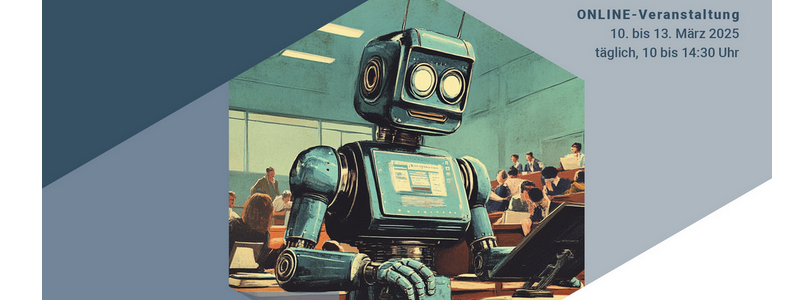
NeL-AI-Week 2025
Künstliche Intelligenz (KI) ist aus dem Hochschulalltag nicht mehr wegzudenken. Ihre Integration stellt alle Beteiligten jedoch weiterhin vor große Herausforderungen. Vor allem die Hochschullehre und die Lehrenden sind mit vielfältigen Veränderungsanforderungen konfrontiert. Dies betrifft die Entwicklung von Curricula, wie auch von entsprechend darauf ausgerichteten, didaktischen Konzepten für die Lehre und das Prüfen. Zudem hinterfragt es auch das bisherige Rollenverständnis von Lehrenden und tangiert die unmittelbare Wahrnehmung der eigenen Person in einer Welt aus immer zahlreicheren künstlichen Avataren. Aber nicht nur die Fragen der Studiengangsorganisation und der Lehrenden stehen im Fokus der NeL-AI-Week, sondern vor allem auch, welche Möglichkeiten und Grenzen für Studierende durch den Einsatz von KI entstehen können.
Die Aktionswoche des Netzwerks Landeseinrichtungen für digitale Hochschullehre (NeL) möchte vor allem einen praxisorientierten Blick auf diese Fragestellungen werfen und mit einer Vielzahl von Praxisbeiträgen von Lehrenden und Studierenden einen Erfahrungsaustausch in diesem Bereich anregen.
Am Eröffnungstag, Montag 10. März, werden thematische Einführungen vorgenommen und Kooperationspotenziale beleuchtet. Der Dienstag und Donnerstag unserer NeL-AI-Week adressiert dann die konkrete Praxisperspektive. Die Praxisbeiträge am Dienstag und am Donnerstag sind auf 15 Minuten Impulsvortrag ausgelegt. Im Anschluss an einen 45-minütigen Vortragsslot mit jeweils drei Impulsvorträgen besteht in parallelen Breakoutsessions die Möglichkeit, zu diesen Praxisbeiträgen vertiefende Fragestellungen einzubringen und mit den Referent*innen zu diskutieren.
Am Mittwoch, 12. März und Freitag, 14. März werden “Specials” u.a. zu rechtlichen Implikationen der KI-Verordnung sowie zur Lehrendenfortbildung angeboten. Wir freuen uns auf eine rege und aktive Beteiligung und wünschen Ihnen einen interessanten Erfahrungsaustausch im Rahmen der NeL-AI-Week!Mit Ihrer Anmeldung sind Sie für die gesamte NeL-AI-Week akkreditiert. Selbstverständlich ist es möglich, nur Teile der Veranstaltung wahrzunehmen.
Institution
- Multimedia Kontor Hamburg gGmbH (MMKH)
- Netzwerk Landeseinrichtungen für digitale Hochschullehre (NeL)
- Stiftung Innovation in der Hochschullehre (StIL)
Neue Regeln zur künstlichen Intelligenz (KI): Was bedeutet das für Hochschulen?!
Die KI-Verordnung (KI-VO) ist ein Prestigeprojekt der EU. Es ist zu erwarten, dass das groß angelegte Regulierungsvorhaben die Verbreitung und den Einsatz von künstlicher Intelligenz (KI) in der Union und über ihre Grenzen hinaus erheblich beeinflussen wird.
In diesem Workshop wollen wir die Inhalte der KI-Verordnung, die Bezüge zum Urheber- und Datenschutzrecht, die Bezüge zu OpenData und insbesondere für (öffentliche) Hochschulen relevante Bezüge herausarbeiten.
Die Teilnehmenden sind eingeladen, vorab ggf. eigene Fragen/Fälle vorzubereiten und bei Interesse im Workshop vorzutragen.
Schwerpunkte sind:
- KI-Verordnung bzw. AI-Act (Entwurf)
- DSGVO
- UrhG
Als virtuellen Lernort werden wir ZOOM nutzen. Der ZOOM-Link wird einen Tag vor Schulungsbeginn bis 13:00 Uhr versendet.
Institutions
- Multimedia Kontor Hamburg gGmbH
Neuronale Netze und Sprachmodelle verstehen: KI-Grundlagen in 30 Minuten
In 30 Minuten erhalten Sie einen verständlichen Überblick über neuronale Netze und große Sprachmodelle (LLMs) – die heute dominierenden KI-Verfahren. Wir betrachten, wie Maschinen aus Daten lernen, wie einfache neuronale Netze und moderne große Sprachmodelle aufgebaut sind. Anschließend werden gesellschaftliche Chancen (z.B. Produktivität, Barrierefreiheit) und Risiken (z.B. Bias, Halluzinationen, Desinformation, Energieverbrauch, Blackbox) einander gegenübergestellt und mögliche Zukunftsszenarien vorgestellt. Für die Teilnahme werden keine technischen Vorkenntnisse vorausgesetzt.
Als virtuellen Lernort werden wir ZOOM nutzen. Der ZOOM-Link wird einen Tag vor Schulungsbeginn bis 13:00 Uhr versendet.
Institutions
- Multimedia Kontor Hamburg gGmbH
Next Level Post-Produktion! 30-Minuten zu: KI-Tools in DaVinci Resolve
In DaVinci Resolve gibt es verschiedene KI-Tools, die die Postproduktion erleichtern sollen.
In 30 Minuten erhalten Sie einen Überblick über den aktuellen Stand der Möglichkeiten, die es bereits gibt und die vielleicht bald hinzukommen. Wir schauen uns an, wie die Tools funktionieren und wie sie in den eigenen Workflow integriert werden können.
Grundkenntnisse in DaVinci Blackmagic Resolve sind nicht erforderlich, aber hilfreich.
Institutions
- Multimedia Kontor Hamburg gGmbH
Next Level Post-Produktion! 30-Minuten zu: KI-Tools in DaVinci Resolve
In DaVincis Resolve gibt es verschiedene KI-Tools, die die Postproduktion erleichtern sollen.
In 30 Minuten erhalten Sie einen Überblick über den aktuellen Stand der Möglichkeiten, die es bereits gibt und die vielleicht bald hinzukommen. Wir schauen uns an, wie die Tools funktionieren und wie sie in den eigenen Workflow integriert werden können.
Grundkenntnisse in DaVinci Blackmagic Resolve sind nicht erforderlich, aber hilfreich.
Anmeldung hier
Als virtuellen Lernort werden wir ZOOM nutzen. Der ZOOM-Link wird einen Tag vor Schulungsbeginn bis 13:00 Uhr versendet.
Institution
- Multimedia Kontor Hamburg gGmbH
Next Level Post-Produktion! 30-Minuten zu: KI-Tools in DaVinci Resolve
In DaVinci Resolve gibt es verschiedene KI-Tools, die die Postproduktion erleichtern sollen.
In 30 Minuten erhalten Sie einen Überblick über den aktuellen Stand der Möglichkeiten, die es bereits gibt und die vielleicht bald hinzukommen. Wir schauen uns an, wie die Tools funktionieren und wie sie in den eigenen Workflow integriert werden können.
Grundkenntnisse in DaVinci Blackmagic Resolve sind nicht erforderlich, aber hilfreich
Anmeldung hier
Als virtuellen Lernort werden wir ZOOM nutzen. Der ZOOM-Link wird einen Tag vor Schulungsbeginn bis 13:00 Uhr versendet.
Institutions
- Multimedia Kontor Hamburg gGmbH
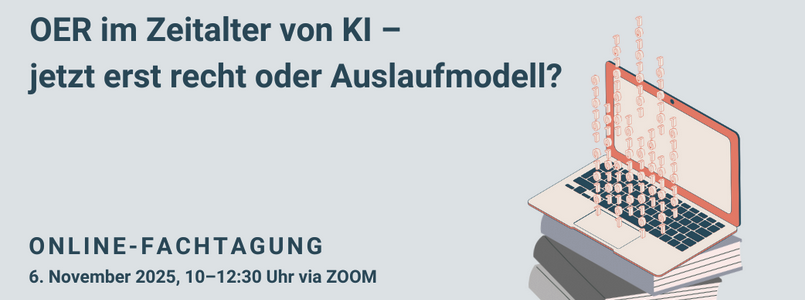
Online-Fachtagung: OER im Zeitalter von KI
Die Entwicklungen der letzten zweieinhalb Jahre zeigen ganz deutlich, dass Künstliche Intelligenz (KI) alle Hochschulbereiche tangiert und signifikant verändern wird. Dies betrifft vor allem auch den Bereich der Hochschullehre und damit die Produktion von Lehr- und Lernmaterialien. Seitdem es mit wenigen Prompts möglich ist, Lehr- und Lernmaterialien quasi per Knopfdruck zu erstellen und da diese Inhalte dann auch als gemeinfreie Werke gelten – sofern nicht durch kreative Promptketten und eigenständige Nachbearbeitungen eine Schaffenshöhe erreicht wird, die ein individuelles Urheberrecht begründen –, ergeben sich Fragestellungen nach den Auswirkungen dieser Entwicklungen auf Open Educational Resources (OER):
- Werden zukünftig Lehr- und Lernmaterialien vornehmlich durch generative KI-Tools generiert?
- Wenn ja, braucht es noch CC-Lizenzen, wenn KI-generierte Inhalte größtenteils gemeinfrei sind?
- Sind in diesem Fall OER-Repositories langfristig noch die richtigen Orte zur Ablage dieser gemeinfreien Inhalte, oder werden dafür vermehrt offene LMS genutzt?
- Welchen Beitrag können OER und entsprechende Repositories zukünftig noch für eine offene Bildung leisten?
- Oder sind OER womöglich die ideale Grundlage für ein urheberrechtskonformes Training von LLMs bzw. eine Anreicherung über RAG-Lösungen, um unterstützend zur Qualitätssteigerung von KI-generierten Inhalten beizutragen?
- Und wie kann der Einsatz von KI die Entwicklung und Verbreitung von OER befördern?
Diesen und weiteren Fragen wollen wir uns in Lightning Talks sowie einem vertiefenden Zwiegespräch zwischen Dr. Sandra Schön und PD. Dr. Malte Persike widmen. Die Teilnehmenden sind herzlich dazu eingeladen, sich in einem zweiten Teil des Gespräches an der Diskussion zu beteiligen. Die Teilnahme ist kostenfrei. Eine Anmeldung über das untenstehende Formular ist aus organisatorischen Gründen erforderlich.
Programm hier
Institutions
- Multimedia Kontor Hamburg gGmbH
- OER-Portal twillo
- Hamburg Open Online University HOOU
Paper Dragon or Machine Tamer: the AI Act’s Approach to Solving Ethical and Societal Concerns Around Generative AI
With the launch of ChatGPT last year and the ensuing debate about the benefits and potential risks of generative AI, also the work on the European AI Act shifted into a higher gear. The European Council and Parliament, working on their respective compromise texts, had to find ways to accommodate this new phenomenon. The attempts to adapt the AI Act went hand in hand with a lively public debate on what was so new and different about generative AI, whether it raised new, not yet anticipated risks, and how to best address a technology whose societal implications are not yet well understood. Most importantly, was the AI Act outdated even before is adopted? In my presentation I would like to discuss the different approaches that the Council and Parliament adopted to governing Generative AI, the most salient points of discussion and the different approaches proposed to solve some of the key ethical and societal concerns around the rise of generative AI.
Prof. Dr. Natali Helberger (Universiteit van Amsterdam, NL)
Natali Helberger is Distinguished University Professor of Law and Digital Technology, with a special focus on AI, at the University of Amsterdam and a member of the Institute for Information Law (IViR). Her research on AI and automated decision systems focuses on its impact on society and governance. Helberger co-founded the Research Priority Area Information, Communication, and the Data Society, which has played a leading role in shaping the international discussion on digital communication and platform governance. She is a founding member of the Human(e) AI research program and leads the Digital Transformation Initiative at the Faculty of Law. Since 2021, Helberger has also been director of the AI, Media & Democracy Lab, and since 2022, scientific director of the Algosoc (Public Values in the Algorithmic Society) Gravitation Consortium. A major focus of the Algosoc program is to mentor and train the next generation of interdisciplinary researchers. She is a member of several national and international research groups and committees, including the Council of Europe's Expert Group on AI and Freedom of Expression.
Institutions
- UHH
Prompt it! 30 Minuten zu: Die bildgebende KI "Adobe Firefly"
Ob fotorealistisch oder kunstvoll, es gibt viele Möglichkeiten Adobe Firefly in kurzer Zeit einzigartige Bilder generieren zu lassen. Über zahlreiche Einstellmöglichkeiten lassen sich die Ergebnisse immer weiter verfeinern oder schnell verändern.
Wir wollen in 30 Minuten einen beispielhaften Workflow für die Bildgenerierung kennenlernen, der uns durch die verschiedenen Arbeitsschritte führt. Am Ende können wir mit einem generierten Bild in andere Adobe-Anwendungen wechseln, um dort weiter daran zu arbeiten.
Diese Online-Schulung richtet sich an Einsteiger*innen und es werden keine Vorkenntnisse vorausgesetzt.
Adobe Firefly lässt sich bis zu einem bestimmten Rahmen kostenlos nutzen. Darüber hinaus wird es kostenpflichtig.
Anmeldung hier
Als virtuellen Lernort werden wir ZOOM nutzen. Der ZOOM-Link wird einen Tag vor Schulungsbeginn bis 13:00 Uhr versendet.
Institutions
- Multimedia Kontor Hamburg gGmbH
Prompt my Song! 30 Minuten zu: Musik- und Soundgenerierung mit KI-Tools
In dieser 30-minütigen Online-Schulung erfahren Sie, wie künstliche Intelligenz die Musikproduktion revolutioniert. Sie erhalten eine grundlegende Einführung in die Möglichkeiten von KI-Tools für die Musikproduktion und Soundgenerierung.
Wir stellen Ihnen die gängigsten und benutzerfreundlichsten KI-Tools zur Musik- und Soundgenerierung vor, damit Sie selbst kreativ werden können – ohne musikalische Vorkenntnisse!
Diese Schulung ist speziell für Einsteiger*innen konzipiert, die wenig bis keine Erfahrung mit Musikproduktion oder KI haben.
Als virtuellen Lernort werden wir ZOOM nutzen. Der ZOOM-Link wird einen Tag vor Schulungsbeginn bis 13:00 Uhr versendet.
Institutions
- Multimedia Kontor Hamburg gGmbH
Prompt my Song! 30 Minuten zu: Musik- und Soundgenerierung mit KI-Tools
In dieser 30-minütigen Online-Schulung erfahren Sie, wie künstliche Intelligenz die Musikproduktion revolutioniert. Sie erhalten eine grundlegende Einführung in die Möglichkeiten von KI-Tools für die Musikproduktion und Soundgenerierung.
Wir stellen Ihnen die gängigsten und benutzerfreundlichsten KI-Tools zur Musik- und Soundgenerierung vor, damit Sie selbst kreativ werden können – ohne musikalische Vorkenntnisse!
Diese Schulung ist speziell für Einsteiger*innen konzipiert, die wenig bis keine Erfahrung mit Musikproduktion oder KI haben.
Anmeldung hier
Als virtuellen Lernort werden wir ZOOM nutzen. Der ZOOM-Link wird einen Tag vor Schulungsbeginn bis 13:00 Uhr versendet.
Institutions
- Multimedia Kontor Hamburg gGmbH
Prompt. Generate. Play. Let's generate Videos! – Teil 1: KI in der Videoproduktion – Überblick & Grundlagen
Diese Online-Schulung bietet einen kompakten Überblick über aktuelle Anwendungen künstlicher Intelligenz in der Videoproduktion. Sie lernen, wie KI-Tools bereits heute die Erstellung, Bearbeitung und Optimierung von Videos verändern und neue kreative Möglichkeiten eröffnen.
Im Fokus stehen grundlegende Workflows der generativen Videoproduktion: von der Entwicklung einfacher Prompts bis hin zur Generierung kurzer Bewegtbildsequenzen aus Text- und Bildvorlagen.
Anhand praxisnaher Beispiele erhalten Sie einen ersten Einblick in mögliche zukünftige Produktionsprozesse und verstehen, wie generative KI die Videoproduktion nachhaltig verändert.
Die Schulung richtet sich an Einsteiger*innen ohne Vorkenntnisse und vermittelt einen verständlichen Einstieg in die KI-gestützte Videoproduktion.
Als virtuellen Lernort werden wir ZOOM nutzen. Der ZOOM-Link wird einen Tag vor Schulungsbeginn bis 13:00 Uhr versendet.
Institutions
- Multimedia Kontor Hamburg gGmbH
Prompt. Generate. Play. Let's generate Videos! Teil 2 – KI-Video-Workflow-Spaces
Sie haben bereits erste Erfahrungen mit KI-gestützter Videoproduktion gesammelt und möchten Ihre Arbeitsabläufe auf die nächste Stufe heben?
In dieser Online-Schulung steht nicht das einzelne KI-Tool im Mittelpunkt, sondern das Zusammenspiel spezialisierter Modelle in einem durchgängigen Produktionsprozess.Anhand eines KI-Video-Workflow-Spaces wird demonstriert, wie sich Ideen, Prompts, Referenzbilder und verschiedene KI-Modelle zur Generierung von Bildern und Videos in einem zentralen Arbeitsbereich vernetzen lassen. Sie lernen, wie sich einzelne Produktionsschritte effizient kombinieren lassen.Anhand praxisnaher Beispiele erhalten Sie Einblicke in KI-Workflows – von der ersten Idee über die Generierung einzelner Szenen bis zur fertigen Videosequenz. Dabei werden Strategien vermittelt, mit denen sich kreative Prozesse strukturieren, wiederkehrende Aufgaben vereinfachen und die Zusammenarbeit verschiedener KI-Modelle optimal nutzen lässt.
Wir zeigen Ihnen die Möglichkeiten der KI-Videogenerierung unter Verwendung der kostenpflichtigen AI-Creative-Suite von Magnific: https://www.magnific.com
Die Schulung richtet sich an Teilnehmende mit ersten Erfahrungen in der KI-Videoproduktion.
Als virtuellen Lernort werden wir ZOOM nutzen. Der ZOOM-Link wird einen Tag vor Schulungsbeginn bis 13:00 Uhr versendet.
Institutions
- Multimedia Kontor Hamburg gGmbH

Universität Hamburg
Adeline Scharfenberg